Showing posts with label wildfire. Show all posts

Tuesday, July 23, 2013

Partnership Announced to Protect Upper Colorado / Big Thompson from Increased Wildfire Risk

Last week U.S. Department of Agriculture Secretary Vilsack and U.S. Department of the Interior Secretary Sally Jewell announced a federal, local and private partnership that will reduce the risks of wildfire to America’s water supply in western states.

Through the Western Watershed Enhancement Partnership, the U.S. Department of Agriculture (USDA) and the U.S. Department of the Interior (Interior) will work together with local water users to identify and mitigate risks of wildfire to parts of our nation’s water supply, irrigation and hydroelectric facilities. Flows of sediment, debris and ash into streams and rivers after wildfires can damage water quality and often require millions of dollars to repair damage to habitat, reservoirs and facilities.
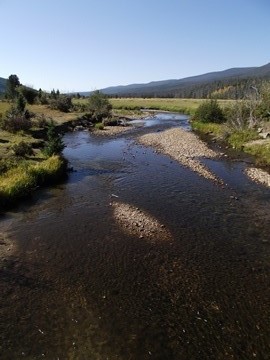
USDA’s Forest Service and Interior’s Bureau of Reclamation will kick off the new partnership through a pilot in the Upper Colorado Headwaters and Big Thompson watershed in Northern Colorado. The partnership will include the Northern Colorado Water Conservancy District and Colorado State Forest Service and builds off of past agreements between the Forest Service and municipal water suppliers, such as Denver Water’s Forest to Faucets partnership.

The Memorandum of Understanding signed on Friday at Horsetooth Reservoir outside of Ft. Collins, Colo., will facilitate activities such as wildfire risk reduction through forest thinning, prescribed fire and other forest health treatments; minimizing post-wildfire erosion and sedimentation; and restoring areas that are currently recovering from past wildfires through tree planting and other habitat improvements.

Horsetooth Reservoir is part of the Colorado-Big Thompson water system which provides water to 860,000 people within eight counties (Boulder, Broomfield, Larimer, Logan, Morgan, Sedgwick, Washington and Weld) and to more than 650,000 acres of agricultural land. It also generates enough electricity to power 58,300 homes annually. The area has experienced several fires in the last few years, including the destructive High Park Fire in June, 2012.

USDA and Interior are working with state and local stakeholders toward formalizing additional partnerships in the following areas:

• Salt River-CC Cragin project in Arizona
• Boise River Reservoir in Idaho
• Mid-Pacific Reclamation Region in California
• Yakima Basin in Washington State
• Horsethief Reservoir/Flathead River in Montana

Nationwide, the National Forest System provides drinking water to more than 60 million Americans. The share of water supply originating on national forest lands is particularly high across much of the West, including the upper Colorado River basin where nearly half of all water comes from National Forests. Healthy forests filter rain and snowmelt, regulate runoff and slow soil erosion – delivering clean water at a far lower cost than it would take to build infrastructure to replace these services.

The goal of the Western Watershed Enhancement Partnership is to restore forest and watershed health and to proactively plan for post-wildfire response actions intended to protect municipal and agricultural water supplies, infrastructures and facilities, water delivery capabilities and hydro-electric power generation. Forest and watershed restoration activities and proactive planning can help minimize sedimentation impacts on reservoirs and other water and hydro-electric infrastructure by reducing soil erosion and the impacts of wildfires, helping water managers avoid costs for dredging, water filtration, and the need to replace damaged infrastructure.


Jeff
RockyMountainHikingTrails.com

Wednesday, July 10, 2013

Hazardous Fuels Reduction Work Continues In Rocky Mountain National Park

The reduction of hazardous fuels is a significant preventative management tool used in preparation for managing wildfire near structures and communities. As seen with the Fern Lake Fire, previous reduction of hazardous fuels aided firefighters in stopping the fire within the park when it made its more than 3 mile run on the morning of December 1, 2012. Ultimately, these projects are done to protect life and property and enhance the safety of firefighters and their ability to manage fire within the park.

Hazardous fuels reduction projects have begun in three strategic locations within Rocky Mountain National Park – along Trail Ridge Road from Mills Drive to Deer Junction; on the west aspect of Emerald Mountain along trails and power lines; and along the Wild Basin Road and adjacent power line. Work will include removing dead trees, the lower limbs of remaining trees, ladder fuels, dead and down logs, and the removal of select trees adjacent to infrastructure. Resulting woody materials will be piled on site and burned in the following winters or may be used for firewood permits depending on location.

For more information on Firewise standards visit www.firewise.org.


Jeff
RockyMountainHikingTrails.com

Friday, June 14, 2013

Big Meadows Fire Now 30% Contained

Following yesterday's assessment by fire staff, the Big Meadows Fire in Rocky Mountain National Park remains at an estimated 333 acres, and is now 30% contained. Hand crews constructed and strengthened fire lines along the northwest flank of the fire; crews working along Tonahutu Creek continued efforts to install hose lays to strengthen containment along the southern flank of the fire.

Fire-fighting resources on the fire today will include an initial attack module of seven fire-fighters, two interagency 20-person Type I hotshot crews, two interagency 20-person Type II handcrews, and five fire engines. Available air resources include two 'air attack' small planes used for fire reconnaissance, two light helicopters, a medium helicopter, and one large heavy helicopter. A National Guard Blackhawk helicopter remains on standby to assist fire operations in the event of a medical emergency. A total of 266 firefighting personnel are now on hand.


Fire activity today was largely limited to an area on the eastern flank of the fire on south facing slopes. Little change in the weather is anticipated over the next 2-3 days, firefighters will likely experience afternoon winds of 8-12 mph with gusts to 20 mph. A chance for afternoon thunderstorms will persist throughout the weekend but these storms may bring little moisture to the area.

There are still seven trails that have been temporarily closed in the area - the Onahu Trail, the Green Mountain Trail, the lower Tonahutu Trail, the Tonahutu Spur Trail, the Grand Lake Lodge Spur Trail, the Timber Lake Trail and the trail which branches toward Mount Ida from Milner Pass.

All major roads and facilities in Rocky Mountain National Park are open - as are the neighboring communities of Grand Lake and Estes Park.

The park has set up a recorded Fire Information Line at (970) 586-1381 which will be updated when new information on the Big Meadows Fire is available.

The weather forecast for today for the Grand Lake area calls for a mix of clouds and sun. A stray afternoon thunderstorm is possible. High 76F. West winds shifting to SE at 10 to 15 mph. The chance of rain is 20%.


Jeff
RockyMountainHikingTrails.com