
“Colorado has long been a leader in forest health and fire mitigation efforts, and this is no exception. As the latest outbreak of pine beetles begins to take shape along the densely populated Front Range, we are taking an aggressive approach to boost tools and partnerships to help protect our communities, forests, and key water sources, and equipping homeowners with the resources they need to better protect their homes. I am grateful to our local partners, foresters, and leaders across sectors for helping us take action on this issue,” said Governor Polis.
To complement the work of the task force, the Governor will also submit a supplemental request of recommended actions to the legislature aimed at reducing wildfire risk, supporting landowners and saving them money on risk mitigation investments, and strengthening Colorado’s long-term response to the pine beetle outbreak. These proposals include tax incentives to expand the use of beetle-kill timber, enhanced support for homeowners conducting fire mitigation, innovative research on managing the beetle population, expanding collaboration with federal partners through Good Neighbor Authority, and new tools to accelerate forest health work across public and private lands. Further details on these proposals will be included in the Governor’s January 2 budget submission and supplemental requests.
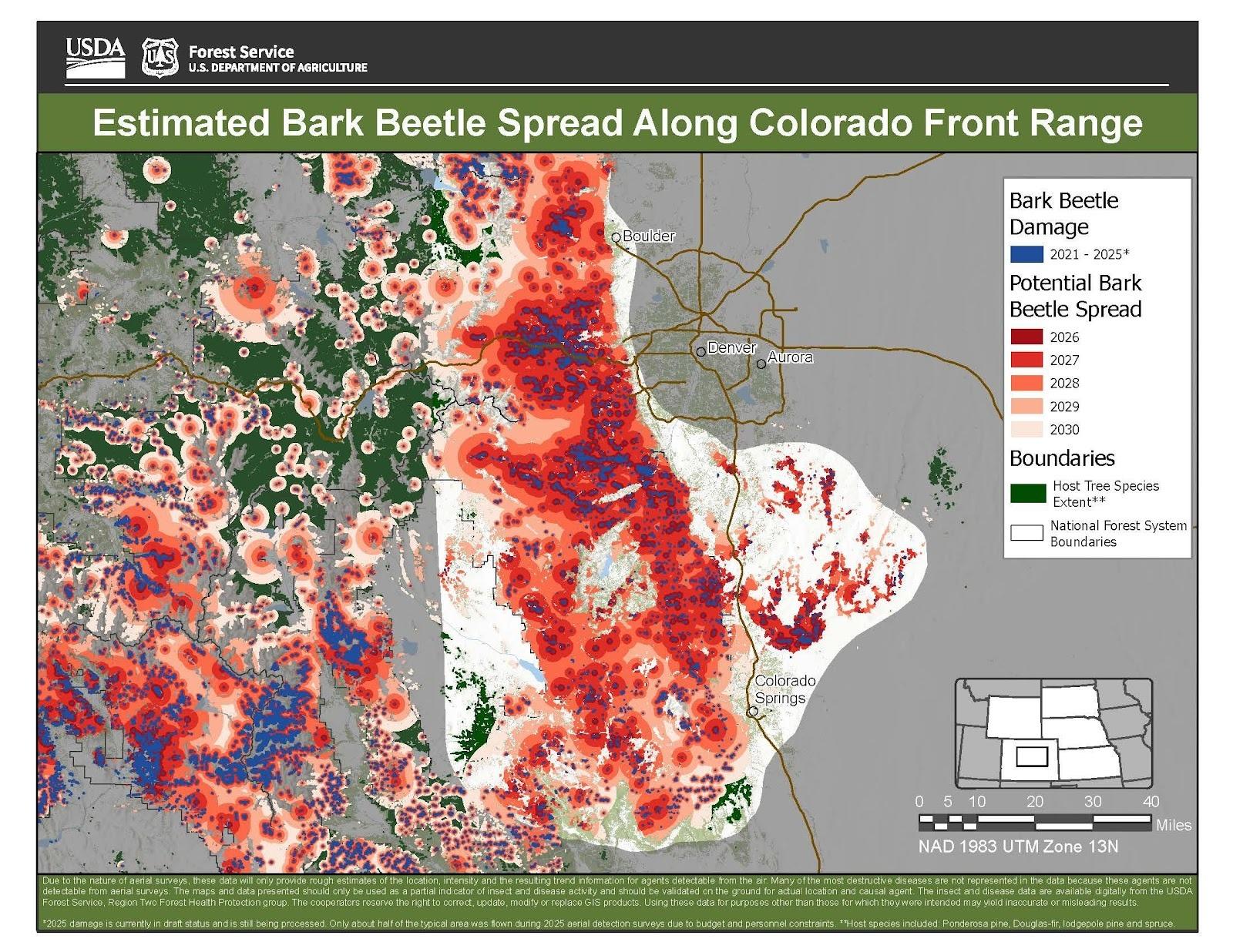
Aerial forest health surveys conducted in 2025 by the U.S. Forest Service and Colorado State Forest Service reveal a significant and expanding mountain pine beetle outbreak in ponderosa pine forests up and down the Front Range, with pockets of brown and beetle-killed trees already visible along the U.S. 285 and I-70 corridors. Warmer temperatures, ongoing drought, and the absence of sustained cold periods have weakened trees and created ideal conditions for beetle survival and spread - conditions expected to continue into the next decade.
State officials have emphasized that early action is essential to reducing long-term fire risk and maintaining and improving insurability in the state. Beetle-killed trees create hazards for firefighters, hikers, utility providers, and local infrastructure. As mortality increases, standing dead timber can intensify fire behavior, threaten transportation corridors, and complicate suppression operations. Many of the most vulnerable areas are located near densely populated communities within the Front Range foothills, where fire risk intersects with homes, businesses, and critical public utilities.
The task force will coordinate across state, local, federal, private, and nonprofit partners to advance urgent and long-term strategies. Its scope includes:
* Improving cross-jurisdictional collaboration to advance innovative and solution-oriented partnerships, and address risks posed by beetle-killed trees and fuel mitigation.
* Developing public education tools for homeowners and communities.
* Evaluating strategies to protect watersheds and utility infrastructure.
* Protecting the region’s outdoor recreation and tourism infrastructure and economies.
* Advancing reforestation planning and forest health through species and age diversity.
* Strengthening wildfire detection, suppression, and recovery innovation.
* Assessing timber markets and opportunities to utilize beetle-kill wood.
* Exploring insurance strategies related to shifting fire risk.
* Identifying new funding strategies and implementing relevant federal wildfire recommendations.
Colorado’s approach draws on lessons from past outbreaks, as well as the state’s experience with catastrophic wildfires and investments in forest health, watershed protection, and community resilience. Colorado will release additional information on task force appointments, timelines, and opportunities for public engagement in early 2026. To learn more about the Mountain Pine Beetle, visit the Colorado State Forest Service webpage.
************************************************************************************
Check out our online trail guides:
- Glacier National Park: HikinginGlacier.com
- Grand Teton National Park: TetonHikingTrails.com
- Rocky Mountain National Park: RockyMountainHikingTrails.com


No comments:
Post a Comment