Zion National Park has Angel's Landing. Then of course there's the Bright Angel Trail in the Grand Canyon, as well as Half Dome in Yosemite. However, there's a hike in northwestern Colorado that's almost as scary as these trails, though not quite as popular or well known.
The Devil’s Causeway is a narrow strip of land that will cause sheer terror, or awe and thrill, for anyone who dare's to cross it. This “land bridge” in the Flat Tops Wilderness Area of the White River National Forest is roughly 50 feet in length, and narrows to as little as 3 feet in width. On both sides of the rough and rugged trail (terrain is the more proper term) are sheer 60-80 foot cliffs, with steep talus slopes dropping another 600-800 feet into the drainages below.
To get an idea of what you'll have to contend with - should you decide to risk life and limb - check out this short video. I should note that this hiker doesn't seem to be too bothered by the heights, judging by the speed with which he crosses the causeway:
Here's another video which provides much more perspective on what the entire hike is like:
For more information on hiking the Devils Causeway, please click here.
Jeff
RockyMountainHikingTrails.com

Wednesday, July 24, 2013


Tuesday, July 23, 2013
Partnership Announced to Protect Upper Colorado / Big Thompson from Increased Wildfire Risk
Last week U.S. Department of Agriculture Secretary Vilsack and U.S. Department of the Interior Secretary Sally Jewell announced a federal, local and private partnership that will reduce the risks of wildfire to America’s water supply in western states.
Through the Western Watershed Enhancement Partnership, the U.S. Department of Agriculture (USDA) and the U.S. Department of the Interior (Interior) will work together with local water users to identify and mitigate risks of wildfire to parts of our nation’s water supply, irrigation and hydroelectric facilities. Flows of sediment, debris and ash into streams and rivers after wildfires can damage water quality and often require millions of dollars to repair damage to habitat, reservoirs and facilities.
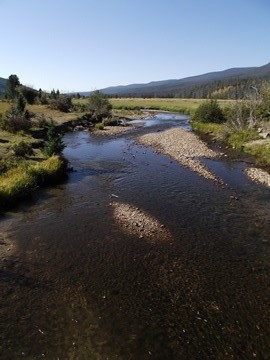 USDA’s Forest Service and Interior’s Bureau of Reclamation will kick off the new partnership through a pilot in the Upper Colorado Headwaters and Big Thompson watershed in Northern Colorado. The partnership will include the Northern Colorado Water Conservancy District and Colorado State Forest Service and builds off of past agreements between the Forest Service and municipal water suppliers, such as Denver Water’s Forest to Faucets partnership.
The Memorandum of Understanding signed on Friday at Horsetooth Reservoir outside of Ft. Collins, Colo., will facilitate activities such as wildfire risk reduction through forest thinning, prescribed fire and other forest health treatments; minimizing post-wildfire erosion and sedimentation; and restoring areas that are currently recovering from past wildfires through tree planting and other habitat improvements.
Horsetooth Reservoir is part of the Colorado-Big Thompson water system which provides water to 860,000 people within eight counties (Boulder, Broomfield, Larimer, Logan, Morgan, Sedgwick, Washington and Weld) and to more than 650,000 acres of agricultural land. It also generates enough electricity to power 58,300 homes annually. The area has experienced several fires in the last few years, including the destructive High Park Fire in June, 2012.
USDA and Interior are working with state and local stakeholders toward formalizing additional partnerships in the following areas:
• Salt River-CC Cragin project in Arizona
• Boise River Reservoir in Idaho
• Mid-Pacific Reclamation Region in California
• Yakima Basin in Washington State
• Horsethief Reservoir/Flathead River in Montana
Nationwide, the National Forest System provides drinking water to more than 60 million Americans. The share of water supply originating on national forest lands is particularly high across much of the West, including the upper Colorado River basin where nearly half of all water comes from National Forests. Healthy forests filter rain and snowmelt, regulate runoff and slow soil erosion – delivering clean water at a far lower cost than it would take to build infrastructure to replace these services.
The goal of the Western Watershed Enhancement Partnership is to restore forest and watershed health and to proactively plan for post-wildfire response actions intended to protect municipal and agricultural water supplies, infrastructures and facilities, water delivery capabilities and hydro-electric power generation. Forest and watershed restoration activities and proactive planning can help minimize sedimentation impacts on reservoirs and other water and hydro-electric infrastructure by reducing soil erosion and the impacts of wildfires, helping water managers avoid costs for dredging, water filtration, and the need to replace damaged infrastructure.
Jeff
RockyMountainHikingTrails.com
Through the Western Watershed Enhancement Partnership, the U.S. Department of Agriculture (USDA) and the U.S. Department of the Interior (Interior) will work together with local water users to identify and mitigate risks of wildfire to parts of our nation’s water supply, irrigation and hydroelectric facilities. Flows of sediment, debris and ash into streams and rivers after wildfires can damage water quality and often require millions of dollars to repair damage to habitat, reservoirs and facilities.
The Memorandum of Understanding signed on Friday at Horsetooth Reservoir outside of Ft. Collins, Colo., will facilitate activities such as wildfire risk reduction through forest thinning, prescribed fire and other forest health treatments; minimizing post-wildfire erosion and sedimentation; and restoring areas that are currently recovering from past wildfires through tree planting and other habitat improvements.
Horsetooth Reservoir is part of the Colorado-Big Thompson water system which provides water to 860,000 people within eight counties (Boulder, Broomfield, Larimer, Logan, Morgan, Sedgwick, Washington and Weld) and to more than 650,000 acres of agricultural land. It also generates enough electricity to power 58,300 homes annually. The area has experienced several fires in the last few years, including the destructive High Park Fire in June, 2012.
USDA and Interior are working with state and local stakeholders toward formalizing additional partnerships in the following areas:
• Salt River-CC Cragin project in Arizona
• Boise River Reservoir in Idaho
• Mid-Pacific Reclamation Region in California
• Yakima Basin in Washington State
• Horsethief Reservoir/Flathead River in Montana
Nationwide, the National Forest System provides drinking water to more than 60 million Americans. The share of water supply originating on national forest lands is particularly high across much of the West, including the upper Colorado River basin where nearly half of all water comes from National Forests. Healthy forests filter rain and snowmelt, regulate runoff and slow soil erosion – delivering clean water at a far lower cost than it would take to build infrastructure to replace these services.
The goal of the Western Watershed Enhancement Partnership is to restore forest and watershed health and to proactively plan for post-wildfire response actions intended to protect municipal and agricultural water supplies, infrastructures and facilities, water delivery capabilities and hydro-electric power generation. Forest and watershed restoration activities and proactive planning can help minimize sedimentation impacts on reservoirs and other water and hydro-electric infrastructure by reducing soil erosion and the impacts of wildfires, helping water managers avoid costs for dredging, water filtration, and the need to replace damaged infrastructure.
Jeff
RockyMountainHikingTrails.com
Monday, July 22, 2013
GAO Report Identifies Maintenance Gaps on National Forest Trails
The U.S. Government Accountability Office (GAO) was recently asked by members of Congress to review the U.S. Forest Service's trail maintenance activities. The study, published in late June, concluded that while the Forest Service does a good job overall of offering trail-users recreational opportunities and maintaining the most popular trails, there remains a significant maintenance backlog, the result of a growing gap between trail maintenance needs and available resources.
 The study points out that the Forest Service has more miles of trail than it has been able to maintain, resulting in a persistent maintenance backlog with a range of negative effects. In fiscal year 2012, the agency reported that it accomplished at least some maintenance on about 37% of its 158,000 trail miles, and that about one-quarter of its trail miles met the agency's standards. The Forest Service estimated the value of its trail maintenance backlog to be $314 million in fiscal year 2012, with an additional $210 million for annual maintenance, capital improvement, and operations. Trails not maintained to quality standards have a range of negative effects, such as inhibiting trail use and harming natural resources, and deferring maintenance can add to maintenance costs.
The Forest Service relies on a combination of internal and external resources to help maintain its trail system. Internal resources include about $80 million allocated annually for trail maintenance activities, plus funding for other agency programs that involve trails. External resources include volunteer labor, which the Forest Service valued at $26 million in fiscal year 2012, and funding from federal programs, states, and other sources.
Collectively, agency officials and stakeholders GAO spoke with identified a number of factors complicating the Forest Service's trail maintenance efforts, including:
1) Factors associated with the origin and location of trails
2) Some agency policies and procedures
3) Factors associated with the management of volunteers and other external resources
For example, many trails were created for purposes other than recreation, such as access for timber harvesting or firefighting, and some were built on steep slopes, leaving unsustainable, erosion-prone trails that require continual maintenance. In addition, certain agency policies and procedures complicate trail maintenance efforts, such as the agency's lack of standardized training in trails field skills, which limits agency expertise. Further, while volunteers are important to the agency's trail maintenance efforts, managing volunteers can decrease the time officials can spend performing on-the-ground maintenance.
Agency officials and stakeholders GAO interviewed collectively identified numerous options to improve Forest Service trail maintenance, including:
1) Assessing the sustainability of the trail system
2) Improving agency policies and procedures
3) Improving management of volunteers and other external resources.
In a 2010 document titled A Framework for Sustainable Recreation, the Forest Service noted the importance of analyzing recreation program needs and available resources and assessing potential ways to narrow the gap between them, which the agency has not yet done for its trails. Many officials and stakeholders suggested that the agency systematically assess its trail system to identify ways to reduce the gap and improve trail system sustainability. They also identified other options for improving management of volunteers. For example, while the agency's goal in the Forest Service Manual is to use volunteers, the agency has not established collaboration with and management of volunteers who help maintain trails as clear expectations for trails staff responsible for working with volunteers, and training in this area is limited. Some agency officials and stakeholders stated that training on how to collaborate with and manage volunteers would enhance the agency's ability to capitalize on this resource.
In commenting on a draft of the report, the U.S. Forest Service generally agreed with GAO's findings and recommendations. You can read the full report by clicking here.
Jeff
RockyMountainHikingTrails.com
Saturday, July 20, 2013
Outdoor Survival - Controlling Panic
In this episode of the Colorado Parks & Wildlife outdoor survival video series, outdoor expert Peter Kummerfeldt discusses controlling panic, including the elements of S.T.O.P.:
Jeff
RockyMountainHikingTrails.com
Jeff
RockyMountainHikingTrails.com
Friday, July 19, 2013
Hiker Struck by Lightning on the Ute Trail
At 12:39 p.m. yesterday, a park visitor called 911 via cell phone to report that someone had been struck by lightning on the Ute Trail. The patient was subsequently located approximately 100 yards from the Ute Crossing Trailhead on Trail Ridge Road approximately one mile above Rainbow Curve. When rangers arrived to the area, the storm was still active with intense lightning activity. The patient was evacuated by park staff and Estes Park EMS down the trail to an awaiting ambulance. The patient was then transported by Estes Park Ambulance to the Estes Park Medical Center. The patient was a 65 year-old female. Her condition is not being released at this time.
 The National Weather Service has issued a flash flood warning for the upper Big Thompson river drainage, including the area of the Fern Lake Fire. This warning remains in effect until further notice.
Lighting is a significant hazard in the Rockies, particularly during the summer months when thunderstorms are most prevalent and in areas located above tree line where shelter is limited. At least 17 people have been struck by lightning just this week: 4 in the Grand Canyon, 3 in Glacier National Park, and 9 on a farm in Wellington, Colorado. Know what to do should you be caught in the backcountry during a thunderstorm.
For updates on the weather, please click here.
Jeff
RockyMountainHikingTrails.com
Subscribe to:
Posts (Atom)