On this date in 1958, U.S. Supreme Court Justice William O. Douglas led a 22-mile trek along the Olympic coast in Washington, just west of Olympic National Park, to protest a proposed extension of Highway 101. This backpacking trip along the rugged coast took three days to complete, but was successful in accomplishing the goal of the roughly 70 participants.
Here’s a pretty cool documentary film of Douglas’s historic hike – both for its historical significance, and the scenery:
Virtually no one went hiking before the 19th century. What occurred that inspired ordinary people to take a walk through the woods for pleasure?Ramble On: A History of Hiking explores the rich history of hiking, and how it evolved into one of the most popular pastimes in the world.
Hiking use on Colorado’s 14,000-foot peaks fell three percent overall in 2025—down 9,000 to an estimated 256,000 hiker-use days—compared to the prior year, according to Colorado Fourteeners Initiative's 11th edition of its hiking-use report. Closure of the Mount Blue Sky Scenic Byway contributed greatly to the decline, which offset higher climbing use on several of the most popular fourteeners. The 2025 estimate is the lowest tally CFI has recorded since the nonprofit began the hiking-use-estimate program in 2015.
The race for most popular fourteeners last year was again a photo finish, with Mount Bierstadt narrowly edging out Quandary Peak. Use on both peaks was estimated to be in the 30,000 to 35,000 hiker-use days range. Bierstadt’s trail counter recorded almost 31,000 hiker days, while Quandary’s trail counter recorded an estimated 30,500 hiker days. Both counters were operational 100 percent of the monitored period. The Decalibron Loop’s Mount Democrat came in third place with an estimated use at 20,000 to 25,000 hiking-use days, which was up more than 5,000 days compared to 2024. Grays and Torreys peaks and Mount Elbert remained in the third tier of use in 2025, suggesting that 15,000 to 20,000 climbers hiked those mountains.
In 2025, an estimated 59 percent of statewide hiking use (152,400 hiker days) occurred on the 12 fourteeners situated closest to the metro area, specifically those in the Front Range, Tenmile Range, Mosquito Range, and Mount Elbert, which is a geographical outlier in the Sawatch Range. The remaining 46 peaks accounted for 103,600 hiker days.
Compared to 2024, hiking use in 2025 fell in four mountain ranges: Front Range (-13,500 days, -16 percent), San Juan Mountains (-10,500 days, -30 percent), Sawatch Range (-2,000 days, -3 percent), and the Elk Mountains (-1,500 days, -17 percent). Hiking use was up in three ranges: Mosquito Range (+9,000 days, +40 percent), Sangre de Cristo Range (+5,500 days, +65 percent), and the Tenmile Range (+4,000 days, +15 percent).
Some of the ups and downs in hiking use in recent years relate to discrete openings and closures of individual peaks. For example, access to Mount Lindsey in the southern Sangre de Cristo Range was restored last year under an electronic waiver program after being closed for five seasons due to landowner liability concerns. This led to a rebound in hiking use in 2025 as people were able to lawfully return to climb the mountain. Meanwhile, access to La Plata Peak was closed starting in mid-August due to a wildfire that started from a campfire located close to CFI’s trail counter. The trail remained closed by the Forest Service through the end of the monitoring season in early October due to hazard mitigation work.
Other noticeable changes can be attributed to the way CFI has tweaked its modeling program. For example, during CFI’s first nine hiking use reports the modeling program assumed that hikers were climbing Mount Blue Sky by the 17-mile round-trip route from Echo Lake. Last year CFI switched to using the 5.5-mile round-trip ascent from Summit Lake, which is more commonly done. That caused Mount Blue Sky to jump from the fourth tier (10,000 to 15,000 hiker-use days) into the second tier (20,000 to 25,000 hiker-use days). This change in assumption may have overstated climbing use in 2024, because, even when the road is open to Summit Lake, access is limited and permitted, a factor not considered by the modeling program. CFI recently obtained permission from Denver Mountain Parks to place a trail counter on Mount Blue Sky above Summit Lake, which should provide greater clarity regarding actual hiking use on this peak. To be clear, CFI does not attempt to
estimate the number of people driving to the top of the road, a mere 138 feet below the summit, and then hiking to the summit.
For the 2025 hiking season, CFI began breaking out North Maroon Peak as a separate summit. Previously it had been lumped in with Maroon Peak when North Maroon was not considered a “ranked” fourteener.
CFI maintained a network of 20 counter locations in 2025, down from 23 counters in 2024 due to the departure of a key staff member who worked on the project. Counters that had observed data for more than 90 percent of the season included Bierstadt (100 percent), Quandary (100 percent), and Pikes (100 percent). Counters that collected between 60 and 90 percent of the season included: La Plata (95 percent), Elbert (88 percent), Shavano (84 percent), Grays/Torreys (76 percent), Handies—Grizzly Gulch (76 percent), Redcloud/Sunshine (76 percent), Princeton (71 percent), Democrat & Bross (65 percent), Huron Peak (64 percent), Sherman (63 percent), Blanca/Ellingwood (62 percent) and Lindsey (60 percent). Counters were not placed last year on Wilson, Sneffels, Challenger/Kit Carson or Handies (American Basin).
CFI’s most recent estimate of hiking use suggests a statewide economic impact of $69.4 million directly attributable to hiking fourteeners based on economic expenditure studies performed by Colorado State University economists John Loomis and Catherine Keske. Their 2009 study found that climbers of Quandary Peak near Breckenridge spent an average of $271.17 per day for gasoline, food, lodging, equipment, and other retail purchases. This expenditure estimate has not been updated in more than 15 years, so it is likely significantly understated.
CFI’s hiking use projections are based on the combination of several data sources. 1) CFI collected hour-by-hour data during the 2025 hiking season using compact infrared trail counters that were placed at 20 locations adjacent to summit hiking trails servicing 23 fourteener peaks. Hiking use is estimated for the period between May 25 and October 4. Missing data were modeled using a linear model incorporating week number, day of the week, holiday and use levels on other similar peaks, which has shown to be statistically accurate. 2) Hiking-use projections for all other fourteeners were based on crowdsourced “14er checklists” submitted to the 14ers.com website by more than 26,900 individual hikers. Estimates for peaks without trail counters were determined using a trend line calculated by the relative frequency of reported hiking use on all peaks using data points as anchors for peaks that had trail counters in 2025.
CFI began deploying compact infrared trail counters as part of a pilot program in 2014 at five locations: Grays/Torreys, Castle, Quandary, Redcloud/Sunshine, and Handies Peaks (American Basin). The program was expanded in 2015 to five additional locations: Mount Elbert (3 locations), Mount Democrat, and Handies Peak (Grizzly Gulch). Additional funding in 2016 allowed CFI to add 10 new monitoring locations: Mounts Sneffels, Sherman, Princeton, Antero, and Shavano, La Plata, Huron and Wilson Peaks, Challenger Point/Kit Carson Peak and Blanca Peak/Ellingwood Point. In 2017, the Antero counter was moved to the Winfield approach to La Plata Peak. In 2018, two new counters were deployed on Pikes Peak (Barr Trail and Devil’s Playground), while the La Plata (Winfield) counter was moved to the West Ridge of Quandary, and the Princeton counter was moved to Mt. Lindsey. In 2020, the West Ridge of Quandary counter was moved to a better location on Mount Princeton, while a
new counter was deployed to Mount Bierstadt. In 2024, the Bierstadt counter was replaced for a third time—two counters were stolen over consecutive years—and counters were placed on Bross and the Winfield approach to La Plata. Due to reduced staff capacity, the following counters were not placed in 2025: Handies (American Basin), Sneffels, Wilson and Challenger/Kit Carson.
CFI uses the term “hiker-use days” to report hiking use on the fourteeners. This represents one person hiking one peak on one day. Anecdotally, we know that individual enthusiasts may hike multiple fourteeners over the course of a given year, including climbing the same peak multiple times. Using “hiker-use days” reports the number of days of hiking use that occurred but does not represent the number of individual people who hiked fourteeners that year.
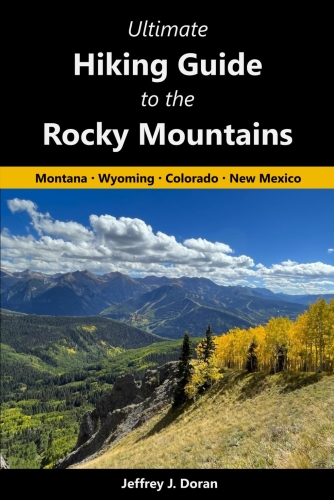
From Montana to New Mexico, the American Rockies stretch for more than a thousand miles. Within this spectacular mountain range are thousands of miles of hiking trails. With such an overwhelming number of options, how will you find and choose the most scenic and rewarding hikes?
Ultimate Hiking Guide to the Rocky Mountains takes all the guesswork out by focusing on some of the most amazing hikes across this range, and provides you with a handpicked list of options that will allow you to make the most of your trips in the Rockies:
On this date in 1937, a Civilian Conservation Corps crew finished construction on a two-mile section of the Appalachian Trail between Spaulding and Sugarloaf Mountains in Maine, thus connecting the final link along the entire trail. At that time, the footpath traveled roughly 2025 miles, from Mount Oglethorpe in Georgia to Mount Katahdin in Maine. However, the Appalachian Trail Conservancy website notes that the route is constantly changing, and estimates that 99% of it has been rebuilt or relocated since its initial completion, including the reroute to its current southern terminus at Springer Mountain. As you can see in this photo, women were active in building the trail, especially before the CCC became involved in 1933:
Here’s the Bates Outing Club conducting maintenance work on the Appalachian Trail, circa 1939. According to the video description, “The black liquid they're smearing on their faces and arms at the 42-second mark is probably pine-tar fly dope (nasty stuff!).”
Virtually no one went hiking before the 19th century. What occurred that inspired ordinary people to take a walk through the woods for pleasure?Ramble On: A History of Hiking explores the rich history of hiking, and how it evolved into one of the most popular pastimes in the world.
On this date in 1967 the unthinkable occurred. Two women, in separate incidents, were killed by grizzly bears while backpacking in Glacier National Park. The incidents were detailed in the best-selling book, Night of the Grizzlies, by Jack Olsen. Fifty years after the events of that night, PBS broadcast an outstanding documentary with the same name. As a hiker, this can be a little difficult to watch at times:
Virtually no one went hiking before the 19th century. What occurred that inspired ordinary people to take a walk through the woods for pleasure?Ramble On: A History of Hiking explores the rich history of hiking, and how it evolved into one of the most popular pastimes in the world.
The joint publication of Lyrical Ballads by William Wordsworth and Samuel Taylor Coleridge in 1798 is widely recognized as the birth of Romanticism in English literature. In addition to being close friends, both poets held nature in the highest regard, and both enjoyed exploring the Lake District on long walking excursions.
In the 1805 version of The Prelude, Wordsworth described himself as a “mountaineer,” a term he didn’t use in the original 1799 version of this unpublished poem. It’s very possible that he may have adopted this expression during the intervening years from his friend and writing partner, Samuel Taylor Coleridge. On August 9, 1802, Coleridge sent a letter to Robert Southey, another one of the so-called “Lake Poets,” which described an extended rambling excursion he took in the Lake District. During the outing, Coleridge made the first known ascent of 3163-foot Scafell, the second-highest peak in England. In the letter, he casually remarked that he had "spent the greater part of the next day mountaineering." The Oxford English Dictionary now recognizes this as the first recorded use of the word “mountaineering" to describe this relatively new and emerging sport. Other Romantic poets, such as John Keats and Lord Byron, would also describe themselves as “mountaineers.”
Virtually no one went hiking before the 19th century. What occurred that inspired ordinary people to take a walk through the woods for pleasure?Ramble On: A History of Hiking explores the rich history of hiking, and how it evolved into one of the most popular pastimes in the world.
Two hikers with an off-leash dog have been charged after coming close to a grizzly bear in Banff National Park. Parks Canada charged them after a TikTok post generated several million views after being published on July 21.
James Eastham, a spokesperson for Parks Canada’s Lake Louise, Yoho and Kootenay field unit, told the CBC that “Failure to keep your pets leashed in the national parks poses risks to pets and wildlife. Bears and other wildlife may react aggressively toward dogs they view as threats, resulting in their injury or death.”
Canadian law states that people must keep their pets on a leash of three metres or less in national parks. If found guilty, the two hikers could face a fine of up to $25,000!
In other words, it's not illegal to take a dog on a hike in grizzly country in Canada, only that it must be kept on a leash. However, multiple studies and historical analyses by wildlife biologists indicate that the presence of dogs more than doubles the odds of a human-bear conflict, and frequently acts as a catalyst for defensive attacks. Most recently, a "New analysis of more than 300 bear encounters suggests our canine companions often increase odds of conflict and rarely serve as early warning systems many recreationists assume." You can find more statistics here.
In America, dogs are not allowed on backcountry trails in most national parks. However, I've seen several hikers flout this law in places like Glacier, Grand Teton, Rocky Mountain and the Great Smoky Mountains.
Here's a CTV News report, which includes the social media video that led to the charges:
Rocky Mountain National Park will be implementing another phase of the Poudre Headwaters Project during the week of August 24-30, 2026. Young greenbacks require food, space, and protection from non-native predators and competitors, like brook trout, which outcompete greenbacks. Removal of brook trout is a key factor for recovery success.
This project takes place on the west side of RMNP and involves the removal of all non-native fish from the Grand Ditch and upstream and downstream tributaries inside the park. Once removed, native Greenback cutthroat trout will be reintroduced into its native range in the headwaters of the Cache la Poudre River.
The first phase of this project inside RMNP took place during August 2025. This year’s project will be very similar to last year’s project. Because of the level of activity associated with the implementation of the Poudre Headwaters Project, all areas and trails within the project zone will be closed to all uses beginning on Monday, August 24 through Sunday, August 30. The Colorado River Trail and the Grand Ditch will be closed.
To remove non-native fish, aquatic biologists will apply a piscicide called rotenone to the 14.3-mile Grand Ditch system and its upstream and downstream tributaries. Rotenone is commonly used by state and federal land management agencies. This project will be led by biologists with the U.S. Forest Service. Other partners include Colorado Parks and Wildlife and U.S. Fish and Wildlife Service. This project is possible thanks to support provided by Trout Unlimited and Rocky Mountain Conservancy.
While this project is underway, the following trails will remain open: East Inlet Trail, North Inlet/Tonohutu Trail, Green Mountain Trail, Coyote Valley Trail, Onahu Trail, and Timber Lake Trail. The Holzwarth Historic Site and Harbison Meadows Picnic Area will also remain open. Fishing access will remain open in all areas along the Colorado River located south of the Colorado River Trailhead, including near the Holzwarth Historic Site and Coyote Valley.
For detailed hiking information on all the trails on the west side of Rocky, please click here.
From Montana to New Mexico, the American Rockies stretch for more than a thousand miles. Within this spectacular mountain range are thousands of miles of hiking trails. With such an overwhelming number of options, how will you find and choose the most scenic and rewarding hikes?
Ultimate Hiking Guide to the Rocky Mountains takes all the guesswork out by focusing on some of the most amazing hikes across this range, and provides you with a handpicked list of options that will allow you to make the most of your trips in the Rockies:
The following is an excerpt from Ramble On: A History of Hiking. [Note: Amazon is currently offering the book at a 29% discount]
After World War II, many soldiers came home after serving overseas and began heading to the mountains for reasons that were vastly different from previous generations. Many veterans sought the wilderness as a way of escaping or coping with the horrors of war they had experienced. One such individual was Earl Shaffer, the man who would become the first person to thru-hike the entire length of the Appalachian Trail. In 1941, Shaffer volunteered
with the U.S. Army and served as a forward-area radar technician in the South Pacific. In addition to the horrors he witnessed himself, the Pennsylvania native also suffered the loss of a close childhood friend, who was killed during the invasion of Iwo Jima. A couple of years after the war had ended, Shaffer read an article about a handful of adventurers who had hiked the entire Appalachian Trail in a series of “section hikes,” and decided that he would try to do it himself in one continuous “thru-hike.” The following year, in 1948, he accomplished this goal by hiking the entire route in 124 days. In his trail journal, which eventually became a book, Shaffer wrote that the war had left him “confused and depressed.” He thought that a long-distance hiking trip might provide a remedy, stating that he wanted to “walk the army out of my system, both mentally and physically.” In 1965, Shaffer reprised this historic feat by walking the “long brown path” in just 99 days. On the 50th anniversary of his first thru-hike, Shaffer hit the trail once again. This time, at the age of 79, he completed the 2158-mile trek in 173 days.
Virtually no one went hiking before the 19th century. What occurred that inspired ordinary people to take a walk through the woods for pleasure?Ramble On: A History of Hiking explores the rich history of hiking, and how it evolved into one of the most popular pastimes in the world.
The National Park Foundation is excited to launch dedicated funding for parks and park partners to collaborate on innovative projects that will strengthen parks, expand what is possible, and ensure these extraordinary places endure for generations. The inaugural cohort, announced today, includes 18 grants totaling more than $10 million awarded to support 21 national parks.
National parks are rooted in natural, historic, and cultural wonders, but they originated as a novel idea, and their future depends on continued innovation. Often called "America's best idea," the national park concept set the blueprint for protecting extraordinary places and sharing them with the world.
With the support of generous donors and partners, NPF is helping parks carry that spirit forward by creating more room to innovate, collaborate, and experiment. These grants provide funding directly to those who know parks best, empowering them to test new approaches, implement scalable technologies, and share what they learn so parks are stronger, and visitors can have better experiences.
NPF has received more than 200 proposals for innovation funding so far. Among those submissions, 18 projects were identified for immediate funding, with an initial focus on real-time information and traffic management, connectivity, data-informed decision-making, and more. These first projects include the following:
* Friends of Acadia and Schoodic Institute will work with Acadia National Park to deploy sensors, predictive analytics, and communication tools that give visitors and park managers real-time information about congestion and wait times along key corridors.
* Grand Canyon Conservancy will expand the ways that visitors can engage with Grand Canyon National Park by increasing connectivity and introducing digitally integrated interpretation of the park, enabling visitors to learn more and go deeper into the story of the iconic landscape.
* Glacier National Park Conservancy will help Glacier National Park deploy bypass lane transponders and badge readers at park entrances, automate passenger counts on shuttle buses, and install real-time parking displays at visitor centers
* Friends of Virgin Islands National Park will install Starlink satellite internet at seven land sites and five marine sites in the remote Virgin Islands National Park to offer connectivity for visitors and to improve emergency communications.
Funding for the inaugural cohort came from NPF's generous donors and partners, including Lilly Endowment Inc. View the full list of projects here.
NPF first invested $2 million in pilot projects led by the National Park Service and Preservation Maryland to advance technologies and experiment with novel equipment across multiple park sites in support of emergency response, asset management, and more efficient park operations. Interest in the pilot proved the need and potential impact of continued, dedicated investment in innovative technologies and creative solutions.
With growing support from NPF's donors and partners, including Robert and Kitty Brunswick, Mr. Cody J Smith, The Ball Foundation, and Arconic Foundation, NPF will award additional grants to parks and park partners in the coming months to support innovation in other focus areas, including natural resource management and interpretation.
NPF will also facilitate learning groups that bring together grant recipients to share information, ideas, and lessons learned to inform and inspire other parks.
To celebrate Colorado Day and the state's 150th birthday, Colorado Parks and Wildlife (CPW) is offering free entry to all Colorado state parks on Monday, Aug. 3, 2026. CPW is one of many sponsors of 14er Climb: Summit 2026, a Colorado Outdoor Recreation Industry (OREC) event celebrating Colorado’s 150th anniversary and America’s 250th anniversary.
The state legislature created Colorado Day to mark the anniversary of statehood, granted in 1876 by President Ulysses S. Grant. The state recognizes this annual holiday on the first of the month, and state parks celebrate the occasion with free entrance on the first Monday of August.
14er Climb: Summit 2026 on August 1
Celebrate Colorado’s 150th and America’s 250th anniversaries by joining this statewide 14er hiking challenge. Whether you hike a peak or choose the Flat 14ers option, we welcome Coloradans of all abilities to get outside, honor our shared history, and celebrate the future we’re building together.
Free State Park Entry on August 3
This free entry day is an opportunity for visitors to immerse themselves in the beauty of Colorado state parks and their diverse landscapes. All other park fees remain in effect, including camping reservations, boat and off-highway vehicle registrations, and hunting and fishing licenses. CPW also has apparel, stickers and postcards honoring this historic event available at cpwshop.com.
CPW urges all state park visitors to act as stewards of our state’s land, wildlife, and water. By balancing outdoor recreation with mindful conservation, we can all protect Colorado's natural beauty. Here are some outdoor tips to help you recreate responsibly.
*** To thank U.S. military members for their dedicated service and sacrifices, Colorado Parks and Wildlife (CPW) is continuing to offer free admission to all Colorado state parks for active-duty military, veterans, and National Guard members during the entire month of August.
It's not clear how long they will offer this discount, but it's usually only for a limited time.
This is a great opportunity to learn about the rich history of the world's greatest outdoor activity! You can also impress your friends with your knowledge of hiking the next time you're on the trail with them!
A Billings, Montana man was impaled by a trekking pole on Granite Peak last week. The freak accident occurred roughly 2 miles below the summit. After assesing his injuries, David Cifaldi, a nurse, determined that he could walk back to the trailhead on his own power. That trip covered nearly 10 miles and took roughly six and a half hours to complete.
KCENNews in Texas provided a full report on the story. Warning: some of the images may be a little disturbing:
Rocky Mountain National Park posted this on their social media yesterday:
Thunderstorms and lightning are common in Rocky Mountain National Park during the summer monsoon season during the months of July and August. Before heading out on your next adventure, know how to protect yourself when thunder roars and lightning strikes.
When you recreate, take time to pay attention to your surroundings and know the most high-risk places to be compared to the safest locations to be during a lightning storm. When it comes to lighting, there are no fully safe places in the outdoors.
If possible, shelter inside a vehicle or a building. If you are out on a hiking trail, the next best option is to get below treeline and shelter at the base of a cluster of low-height trees or in a lower elevation dry ditch or gully.
Taking a drive on Trail Ridge or Old Fall River Roads? Stay in your vehicle. Do not walk to overlooks or stand outside in parking areas.
Avoid the following highest-risk locations during a storm:
🌩️ The top of a mountain peak
🌩️ Exposed open slopes above tree line
🌩️ Caves or rock outcroppings on the side of a mountain
🌩️ Areas near open water
🌩️ The base of a single tall tree
🌩️ The inside of a tent when camping in an exposed area
🌩️ Areas near rivers, streams, creeks and places with wet and boggy ground
From Montana to New Mexico, the American Rockies stretch for more than a thousand miles. Within this spectacular mountain range are thousands of miles of hiking trails. With such an overwhelming number of options, how will you find and choose the most scenic and rewarding hikes?
Ultimate Hiking Guide to the Rocky Mountains takes all the guesswork out by focusing on some of the most amazing hikes across this range, and provides you with a handpicked list of options that will allow you to make the most of your trips in the Rockies:
In 1894, the Mazamas held their inaugural meeting atop Mt. Hood, the highest peak in Oregon. To become a charter member of the prospective club, hikers were required to attend this meeting.
On June 12, 1894, organizers published an advertisement in the Morning Oregonian announcing the forthcoming meeting, which was to include a “typical mountain banquet.” On July 17th, more than 300 people responded to the advertisement by arriving at one of two staging areas along the flanks of the 11,249-foot mountain. Two days later, a total of 193 climbers (155 men and 38 women) reached the snow-capped summit, of which 105 would become charter members. Before descending the peak, the newly minted organization released three homing pigeons with notes announcing to friends in Portland that the club had been successfully established.
Today, the Mazamas are one of the largest hiking and mountaineering clubs in America.
Here’s a photo of prospective members climbing the Cooper Spur on Mt. Hood to take part in the inaugural meeting atop the mountain:
Virtually no one went hiking before the 19th century. What occurred that inspired ordinary people to take a walk through the woods for pleasure?Ramble On: A History of Hiking explores the rich history of hiking, and how it evolved into one of the most popular pastimes in the world.
Rocky Mountain National Park posted this on their social media yesterday:
Beginning on Tuesday, July 21, through Thursday, July 23, the Wild Basin Road in Rocky Mountain National Park will be closed to all uses, including vehicles, bicycles and pedestrians for road maintenance.
This closure will occur at the Wild Basin Entrance Station and will include the entire two-mile section of the road to the Wild Basin Trailhead.
The park’s roads crew will be spreading gravel and grading this narrow road to address ruts, potholes and help with drainage. Due to the road being closed to all uses from July 21 through July 23, visitors should avoid this area of Rocky Mountain National Park during this time.
The trailhead parking area for the Sandbeach Lake Trail will not be impacted by this closure.
Around 5 p.m. on July 16, 2026, a thunderstorm dropped significant rainfall at Curecanti National Recreation Area, triggering at least three major mudslides on the East Portal Road. Extensive debris washed down from drainages above the roadway, covering significant lengths of the roadway with up to six feet of boulders, rocks, and mud. Debris also covered the entire East Portal campground and much of the East Portal picnic area.
The campground, picnic area, and the East Portal Road will be closed until assessments and repairs can be completed and all facilities are safe for public access. Those assessments and repairs are underway. There is currently no estimate of total damage, costs, or opening dates. The road is close to all traffic including pedestrians and bicyclists.
Twenty-one-day trippers, campers, and anglers were temporarily stranded at the bottom of East Portal Road on July 16. Responders were on scene by 5:45 p.m., and no injuries were reported.
Law enforcement from the National Park Service and facility management crews from the NPS and Bureau of Reclamation arrived, secured the area, and began clearing the roadway with heavy equipment. They were able to evacuate 18 visitors by midnight. One visitor on a motorcycle and two visitors with vehicle problems waited until the roadway was less saturated to depart in daylight and were evacuated by 9 a.m., July 17.
East Portal Road is managed by the Bureau of Reclamation and provides access to the Crystal Dam and Gunnison Tunnel. It also accesses the East Portal Campground and recreational opportunities in Black Canyon of the Gunnison National Park and Curecanti National Recreation Area. The six-mile road has a steep grade of 16%. The road passes through forested areas burned by the 2025 South Rim Fire.
The NPS advises visitors to use extreme caution while traveling in areas with fire scars during times of rain. Soil with little vegetation cover can become saturated and trigger landslides.
As we’ve already seen in this four-part series, Cincinnati has had its share of famous concerts. Unfortunately, it’s also hosted several infamous concerts. As the 1970s progressed, rock fans seemingly became rowdier, more aggressive, and possibly even more inebriated, while concert venue management practices became sloppy and lax. As we shall see, there were two major incidents during this period that would shock the world.
The Ohio River Music Festival (August 3, 1975)
Held at the University of Cincinnati’s football stadium, the Ohio River Music Festival drew an estimated crowd of 35,000 to 50,000 fans, while another 18,000 reportedly lingered outside, many who conspired to breach the perimeter. Just months after releasing their breakthrough album, Toys in the Attic, Aerosmith was announced as the headliner for the festival. Though their fans loved them, Cincinnati Enquirer music critic, Cliff Radel, described them afterwards as “an inordinately mediocre band.” Ouch! A young promising act known as Styx opened the festival at 10 a.m. that morning. Among the other bands to hit the stage that day were Blue Oyster Cult, Foghat, The Outlaws, and Black Oak Arkansas. At that time, this one-day festival was the largest rock concert in Cincinnati history. To help with security, concert promoters hired twenty black belt karate experts from Chicago. While city and university police patrolled the perimeter of the venue to keep gatecrashers out, the black belts were used to keep paying concertgoers away from the stage. The University of Cincinnati’s student paper, The News Record, relayed an incident that resulted from this decision:
One six-foot “gorilla” dressed in a black karate gee corralled a concertgoer trying to climb over the fence, pulled him down by his hair, and then gave him several drop kicks in the face for good measure — just so he wouldn’t get the idea again. Watching the episode from the stage, the lead singer of Nitty Gritty Dirt Band approached the black belt during a break and said, “You know pal, you’re one bona fide ass-hole.”
Throughout the day, there were several incidents where gatecrashers attempted to storm the inner and outer perimeters. In 1979, Illinois State University ran an article about one of the hired martial artists for the festival. He’s quoted in the extended piece, stating:
The kids stormed the building, scaled the walls. We couldn't stop them, so we had to go inside and evict the ones who'd gotten in… During the day, the crowd took complete control of the stadium—all the entrances and exits. We pulled all our guys out of there and barely managed to secure the front stage and backstage areas… It was like Custer's Last Stand.
The next day, the Cincinnati Enquirer reported that dozens of fans were treated at local emergency rooms, while many others required first aid for cuts from broken glass bottles hurled by unruly fans. There were at least 12 arrests, many of them for disorderly conduct, while several police officers were reportedly assaulted. At least one fan died of a drug overdose. Afterwards, The News Recorddeclared the festival to be “a genuine drug and violence bonanza.” Though it was billed as the “1st” Ohio River Music Festival, a second festival never materialized.
Led Zeppelin (April 19/20, 1977)
Led Zeppelin played two nights in Cincinnati during what ended up being their final tour of North America. Both concerts sold out, and attracted more than 36,000 fans over the course of two evenings. Unfortunately, the concerts spawned mayhem, and are considered to be one of the worst incidents in Zeppelin’s history. Trouble started well before the band even hit the stage. When tickets for the two Cincinnati Riverfront Coliseum shows went on sale at the Ticketron in Shillito’s in Lexington, KY, a near riot broke out in the old department store when fans rushed the counter. This was a mere warm-up for Zeppelin’s first show, when nearly a thousand fans attempted to crash the gates. As you might expect, a riot ensued, with fans smashing the glass entrance doors and windows that surrounded the perimeter of the arena. Afterwards, the Lexington newspaper described the scene as “a pitched battle between Cincinnati police and rock and bottle throwing non-ticket holders.” Obviously, there were multiple injuries reported, including a fan from Dayton who plunged 20 feet onto a concrete ramp while attempting to scale a wall. The Detroit Free Press also reported: “In Cincinnati last week, a fan was pushed from the third level of the outdoor Riverfront Stadium into traffic below and was killed.” However, I couldn’t confirm this incident in any of the Cincinnati press clippings I found. There were also several reports of a police motorcycle being thrown off the elevated concourse onto the street below. At least 70, possibly as many as 100 fans, depending on the reporting, were arrested during the melee.
Even more frightening for concertgoers was the crush of humanity as the crowd surged towards the limited number of open doors. At that time, concerts at Riverfront Coliseum were festival seating, meaning that seats were on a first-come first-serve basis. If you wanted a great seat to watch your favorite band, you had to arrive early and wait in line. After the doors opened, you were then competing with fans rushing through the other entrances. So, basically, it was every fan for themselves once inside the arena. The events that unfolded that night should’ve been a major warning shot to Riverfront Coliseum, concert promoters, and city officials; however, it was ignored or tolerated by all, the consequences of which would result in one of the most tragic incidents in rock history two years later.
The Beverly Hills Supper Club fire (May 28, 1977)
Just across the Ohio River, in Southgate, Kentucky, was the renowned Beverly Hills Supper Club, a popular gambling, entertainment, and dinner theatre venue. The historic nightclub opened in 1937, and had attracted a myriad of superstars over the years, including Milton Berle, Pearl Bailey, Louis Armstrong, Mel Torme, Jimmy Durante, Marilyn Monroe, Tony Bennett, Steve Lawrence, Liberace, Jerry Lee Lewis, Al Green, Frankie Valli, Jerry Lewis, Dean Martin and Frank Sinatra. Well before he became a headliner at “The Showplace of the Nation,” Steubenville, Ohio native Dean Martin worked at the club as a blackjack dealer.
On Memorial Day weekend in 1977, singer and actor John Davidson was scheduled to perform to a packed house. With other events and dinner parties taking place, it’s estimated that up to 3000 people were in the club that night – double the fire code limit based on the number of exits in the building. The Cabaret Room, where Davidson was to perform, was considered safe for roughly 600 patrons; however, estimates of 900 to 1300 people were reported to be in attendance that evening, with many seated in the aisles. Shortly before 9:00 PM that night, smoke was detected in the Zebra Room. Almost immediately, an 18-year-old busboy named Walter Bailey walked onto the stage while a comedy duo was performing (Davidson’s warm-up act), and calmly told the crowd that a fire was detected on the opposite side of the building. Roughly a third of the audience instantly got up and left the building. However, another third thought he was part of the comedy act, and remained seated. Unfortunately, the fire spread rapidly, and many of those patrons became trapped in the sprawling complex. By midnight, the roof of the building had collapsed. The inferno ended up claiming the lives of 165 people, including John Davidson's music director. More than 200 people were also injured. At that time, it was the third deadliest nightclub fire in world history. It now ranks seventh. It’s also recognized as Kentucky’s worst disaster since the Civil War.
Faulty aluminum wiring was cited as the cause of the fire. However, more recent evidence and testimony suggests that the mob may have purposely burned the club down, and then Kentucky officials purportedly engaged in a cover-up. Almost a decade later, the families of the victims received a $49 million settlement in the first class-action, mass tort lawsuit in U.S. history. The fire and the lawsuit resulted in a nationwide movement to improve fire codes and enforcement. You can read how the layout of the convoluted complex acted as a force multiplier that night.
To his credit, John Davidson helped patrons get out of the building. Afterwards, he apparently suffered greatly from PTSD, and for years was purportedly afraid to perform in closed venues. Forty years later, he gave a rare interview about that night. Here’s a short documentary about the fire from the Cincinnati Enquirer:
The Who (December 3, 1979)
December 3, 1979 is a day that will live in infamy for many Cincinnatians, at least for those in “my generation.” Widely known in the region as “THE Who concert,” the iconic British rock band played to a sold-out crowd of 18,348 that night. Because of festival seating, a standard practice for many arenas at that time, fans began arriving at Riverfront Coliseum more than seven hours before the doors were opened. As show time approached, fans began pressing forward to get closer to the doors. There are multiple reports of forward surges in the crowd, what some described as waves where people were crushed, and some even being knocked to the ground. The situation was exacerbated when a limited number of doors were opened – for whatever reason. Around that same time, the Coliseum speakers began blasting the film trailer for Quadrophenia (there are also reports that this may have been a final soundcheck). Regardless, fans outside of the arena thought the concert had begun, thus resulting in what has been described as a stampede.
Fifteen-year-old concertgoer, Suzanne Sudrack, told the AP that night: “You could see people getting hurt. People were flailing elbows and smashing noses. You could see people going down.”
Seventeen-year-old Michael Jordan stated: “I was in the middle. It was crazy. You had to fight to save your life.”
Fred Wittenbaum, a then 14-year-old student from Finneytown High School, later told Fox19: “A lot of people got pushed, and then they got pushed through some of the doors - through the glass, which alleviated the pressure. It was terrible.”
The crush of fans killed 11 concertgoers that evening. Though they were trampled by fellow fans, they actually died of asphyxiation. Three of those eleven concertgoers attended Finneytown High School, the youngest of which was 15. There were numerous other injuries as well.
On schedule that evening, The Who hit the stage completely unaware of what had happened on the plaza. Though Cincinnati fire officials wanted to cancel the show, longtime Who manager Bill Curbishley convinced them to allow the concert to continue and avoid a likely riot. Cincinnati Mayor Ken Blackwell agreed. Later, Curbishley told Rolling Stone Magazine that:
The band didn’t see it. I saw it when I went up on the plaza level, with the medics, so I saw just how catastrophic it was… There were so many people there unconscious, and on the floor, and injured. I knew straight away that there’d be people dead. It was almost like a bomb had exploded.
Unexpectedly, roughly seven months ago, 26 minutes of film footage from the concert was uploaded to YouTube, apparently by a fan who used a Super 8 Film camera to record various segments of the show. Other than a very short clip from a local TV station, this appears to be the only published footage from the concert. Interestingly, there’s a clip (at roughly the 5:30 mark) of Pete Townshend pleading with the crowd to take a step back away from the stage. About a minute before this, you see Roger Daltrey speaking with someone behind the amps. Daltrey then walks over to Townshend and obviously relays the conversation he just had. My guess is that fire marshals may have expressed concern about a repeat of what had happened outside.
At that time, “THE Who concert” was the deadliest tragedy in rock concert history, and still ranks as the worst non-fire, non-terror-related catastrophe. Less than a month afterwards, Cincinnati City Council imposed a ban on festival seating for the next 25 years. Arenas across the country followed suit by adopting assigned seating and various other crowd management policies. As you would probably expect, the victims' families sued the band, concert promoter, and the city in a class action lawsuit.
For the families, friends, city, and the band, healing was a slow process. The Who felt that fingers were pointed squarely at them. As time passed, it looked like they would never return to the Queen City. However, more than 30 years later, the band finally made a connection after several Finneytown High School graduates established the P.E.M. Memorial Scholarship Fund to commemorate the lives of the three students who died that night. Since its founding in 2010, scholarships have been awarded each year to three Finneytown seniors who plan to pursue the arts or music in college. Roughly two years after its creation, The Who became involved with the program. Then in 2018, for the first time since 1979, Roger Daltrey returned to Cincinnati to meet the families of the victims and the founders of the fund:
A year later, on the 40th anniversary of the disaster, local TV station WCPO aired an outstanding documentary about the tragedy and its aftermath. The Who: The Night That Changed Rock featured interviews with survivors and family members, as well as the first extended sit-down interviews with Roger Daltrey, Pete Townshend and Bill Curbishley. If you want to gain a better understanding of what happened that night, I highly recommend this special:
Three years later, on May 15, 2022, The Who finally returned to Cincinnati for their first concert since the disaster. The band couldn’t have handled this momentous event any better. As you would probably expect, the concert became a tribute to those who died almost 43 years earlier. The families of nine victims killed in 1979 were in attendance, and were seated in the front rows. Near the end of the concert, during a soft piano prelude to “Love, Reign O’er Me,” a massive video screen on the side of the stage showed black-and-white photos of the 11 fans who perished. Safe Passage, a local rock band that’s comprised of two 1979 Finneytown High School graduates, both of whom attended the 1979 concert, were the warm-up act. After playing three original tunes, they closed their set with a cover of Pink Floyd’s “Wish You Were Here.” Additionally, The Who’s performance of their final song, “Baba O’Riley,” contained an orchestral arrangement that featured 10 students from Finneytown High School’s music program. Afterwards, The Who donated their entire share of the proceeds from the concert to the P.E.M. Memorial Scholarship Fund, which totaled more than a half-million dollars.
After “THE Who concert” tragedy, and the subsequent ban on festival seating, many of the biggest touring bands simply avoided Cincinnati. In general, many big name acts refused to play arenas that had banned festival seating because they enjoyed, or fed off the energy generated by their most rabid fans in front of the stage. Perhaps this is at least partially why smaller venues like Sudsy Malone's, Annie’s, and especially Bogart’s, thrived during the 1980s. They were able to fill a demand for live concerts by booking emerging acts. Though a few major acts continued to play at Riverfront Coliseum, it was the opening of Riverbend Music Center in 1984 that initiated the process of bringing big name artists back to the city. By 2004, Cincinnati was the only city among the top 50 concert markets that still banned festival seating. Likely sensing they were missing out on significant revenue streams, Cincinnati City Council lifted the ban in August of that year.
Closing Time:
Cincinnati’s standing on the world’s stage isn’t defined by a single event, a single genre, or even a distinctive sound, but rather by the totality of its long and rich sonic heritage. For more than a hundred years, the Queen City has been a destination for top artists in nearly every musical genre. Numerous groundbreaking songs across multiple genres have been recorded here. Most importantly, Cincinnati has been at the forefront of several emerging styles over the years, including bluegrass, doo-wop, rock & roll, soul and funk. The city has also played important roles in helping to shape country, blues, and R&B. Though not mentioned in this blog series, the Queen City is also home to the world-renowned Cincinnati Symphony Orchestra, the 5th oldest orchestra in the US; the Cincinnati Opera, the 2nd oldest opera company in the US; and the May Festival, which is the longest-running choral festival in the Western Hemisphere. In summary, it’s the broad diversity of genres, institutions, legendary venues, and historical events over the last 150 years that I believe cements Cincinnati’s legacy as one of America’s great music towns.
Though it’s probably been a long time coming, Cincinnati is finally embracing its rich musical heritage. In addition to dozens of historical markers and outdoor murals that celebrate this legacy, the city opened the Black Music Walk of Fame in 2023, which is the only outdoor augmented reality attraction in America. In 2017, Xavier University launched a digital exhibit dedicated to King Records, while PBS has recently produced an acclaimed documentary about the iconic label. This worthy and proud legacy is finally being shared with the rest of the nation.
What are the chances that one of the most beloved movies of all time is artistically linked to one of the greatest rock albums ever recorded?
For the uninitiated, the “Dark Side of the Rainbow” theory asserts that Pink Floyd purposely synchronized The Dark Side of the Moon to The Wizard of Oz. For those who have seen it, the mashup produces dozens of striking coincidences between the film and the album, where actions on the screen seemingly correspond to the lyrics, chords and musical moods of the Dark Side tracks.
So, is it real, a cosmic coincidence, an ingenious marketing ploy, or just another conspiracy theory? In addition to a complete viewing guide for the synchronicities, The Dark Side of the Rainbow explores a possible explanation for their existence. The book is now available in both paperback and eBook!
Mark Twain purportedly once said, "When the end of the world comes, I want to be in Cincinnati because it's always twenty years behind the times," thus implying that the city was a cultural backwater, and nothing of any consequence ever happened there. However, if he had lived in the Queen City during the last half of the twentieth century, especially between the 1950s and 70s, he likely would’ve had a much different perspective.
Since at least the 1920s, Cincinnati has been a hub for nearly every major touring act. Being a major college and pro sports town, the city has been blessed with a wide array of venues and arenas, which in turn has attracted a variety of artists, from local and regional acts to national and international headliners. After the emergence of rock & roll in the 1950s, nearly every big name in rock history has performed in the Queen City, many playing in small to midsize clubs when they were nascent up-and-coming acts. After achieving major mainstream success, most of those same artists returned to headline larger arenas, while many continued to come back in later years as heritage acts. And, with virtually no viable fresh talent to kick them off the stage, many continue to turn up as geriatric acts... but I digress.
The diversity of smaller clubs and venues allowed bands to build loyal followings in Cincinnati. As a result, several artists used the city as a launching pad for national and international stardom. Among these include the Allman Brothers, Grand Funk Railroad, James Gang, Mountain, John Prine, Alice Cooper, Bob Seger, Jimmy Buffet, Pure Prairie League, Shooting Star, Billy Joe Royal, and Lonnie Mack.
Well before the classic rock era, however, nearly every major pop, R&B, and rock & roll artist from the 1950s played in Cincinnati during their heydays. This included Bill Haley, Chuck Berry, Fats Domino, Ray Charles, Bo Diddley, The Drifters, The Everly Brothers, Buddy Holly, Jerry Lee Lewis, Eddie Cochran, The Coasters, The Platters, Pat Boone, Lloyd Price and Big Joe Turner. Many of these same acts performed multiple times during this era, while nearly all of them played at the Cincinnati Gardens, one of the most important live music venues in the city through the mid-1990s. When it opened in 1949, it was the seventh largest indoor arena in the United States. The notable exception to this parade of stars was Elvis Presley. For whatever reason, the King of Rock & Roll didn’t visit the Queen City until 1971. On his fourth and final visit, on June 25, 1977, he played at Riverfront Coliseum, which turned out to be his second to last show. He was found dead on the bathroom floor of his Graceland mansion less than two months later.
By the late 1960s, the number of live music venues in Cincinnati was beginning to expand, thus providing the biggest names in rock with a broader array of places to perform. Among these were Janis Joplin, Buffalo Springfield, Jefferson Airplane, The Byrds, Steppenwolf, Sly and the Family Stone, Procul Harem, Santana, The Fifth Dimension, The Paul Butterfield Blues Band, Blood, Sweat & Tears, Frank Zappa, and The Kinks. Many of these same acts played on multiple occasions throughout this period, and well after they became major touring acts. While the full list is quite expansive, there are a handful of notable concerts during this period that should be given more space. They include:
Jimi Hendrix: The Jimi Hendrix Experience made its Cincinnati debut at the Xavier University Fieldhouse in March of 1968. They played two shows that evening, with Soft Machine as the opening act. Beforehand, a short article in the school newspaper declared: “The Hendrix shows promise to rival the traditional Muskie drink ’n drowns for psychedelic happenings and new vibrations.” The university would host several other major acts during this period, including The Guess Who, Arlo Guthrie, Stevie Wonder, The Beach Boys, and Chicago.
The Grateful Dead: On Thanksgiving weekend in 1968, the Grateful Dead played two nights at the Hyde Park Teen Center, a tiny church that was converted into a teen hangout spot. The band was recruited to play there by Jim Tarbell, a young youth counselor. As the story goes, Tarbell traveled to San Francisco the year before to check out the Bay Area hippie scene. After seeing the Dead play at the Fillmore, he arranged for them to headline two youth concerts during their upcoming tour of the Midwest. Two years later Tarbell would open the legendary Ludlow Garage. Several decades later he was elected to Cincinnati City Council before ending his political career as Vice Mayor in 2007.
The Yardbirds: This seminal British Invasion band is famous for featuring three of the greatest guitarists in rock history. After the departures of Eric Clapton (1965) and Jeff Beck (1966), Jimmy Page assumed leadership of the band. However, as major creative differences emerged in early 1968, the Yardbirds agreed to one final tour before parting ways. On April 26, during the American leg of that tour, the band played at the brand new Cincinnati Convention Center. What makes this concert so remarkable is that it was the St. Xavier High School prom! Moreover, the band didn’t know they were playing a prom until only a few hours before hitting the stage. Page didn’t find out until one of the student organizers, already dressed in his tux, picked him up at the airport that afternoon and explained to him why he was dressed the way he was. That night, the students, some of whom realized they were witnessing the future of rock, saw the band play an early version of “Dazed and Confused,” with Page, of course, using his patented violin bow during the performance. The Yardbirds broke up less than three months later. By August of that year, Page would form Led Zeppelin.
The Who: Just two months after their groundbreaking performance at the Monterey Pop Festival in June of 1967, The Who played two gigs (on the same day) at Cincinnati Music Hall during their first American Tour. However, despite their massive success at Monterey, The Who weren’t the headliners at those shows, nor at any point on that tour. Rather, they and The Blues Magoos were the support acts for Herman’s Hermits! Despite this, the band still smashed their instruments.
The Rolling Stones: The Stones paid their first visit to Cincinnati during their 1965 2nd American Tour in support of their latest album, Out of Our Heads. Tickets for the Cincinnati Gardens show ranged between $2.50 and $4.50. However, despite the relatively low price for admission, they played to only 2500 fans! Apparently, due to their suspected moral shortcomings, the band received major backlash from local church and school groups, which ultimately undermined ticket sales. There were several other dates on this tour that also reported sparse turnouts. Perhaps the band needed a better promoter?
Bob Dylan: “Zimmy” performed in Cincinnati in both the spring and fall of 1965. Between those two dates was a sea change in his musical style, and therefore, in American rock music. On March 12th, during his second tour of America, which would be his final solo acoustic tour, he played at the Taft Theater. During the fall tour, which became his first electric tour, he returned to the Queen City on November 7th to play at Music Hall. This would be the first rock concert at this exceptionally beautiful Venetian Gothic structure, which was built in 1878, and is now a National Historical Landmark:
Between those two Cincinnati dates, as mentioned, the music world had been turned upside down. As Robbie Robertson of The Band later explained, “We were in the midst of a rock ’n’ roll revolution.” On July 25, 1965, Dylan played his first electric gig at the Newport Folk Festival, where he was booed by folk purists who believed he had betrayed them. This anger from some of his older fans would be expressed at several venues over the next several months. Roughly a month after the festival, Dylan released Highway 61 Revisited, his first fully electric album. The first song on that LP, “Like a Rolling Stone,” is widely recognized as one of the most influential rock songs of all time. In late September he embarked on his first electric tour with his new backing band, The Hawks, who eventually became known as The Band.
The Beatles (1964 and 1966): One of the most famous rock concerts in Cincinnati history was The Beatles’ show at the Cincinnati Gardens on August 27, 1964. During their short half-hour set, the lads from Liverpool apparently rushed through 12 songs. Luckily for the 14,000 fans in attendance - mostly screaming teen girls – a group of disc jockeys, known as the “Good Guys,” ensured Cincinnati would be among the 24 stops on their first North American tour. The day after the concert, the Cincinnati Enquirer stated that “The Beatles made their appearance, and the mob exploded into a maelstrom of sound—screaming, stomping, crying, begging, moaning—every imaginable sound a human is capable of making.” You know, the usual mass hysteria of that time. Here's a collection of short video clips from their visit. Afterward, Hamilton County Juvenile Court Judge Benjamin Schwartz scolded the parents who allowed their girls to go to the concert. In addition to some pretty wild commentary and testimony, the judge reported that “one newspaper said that the girls stripped off the veneer of civilization.” No wonder the community was afraid of the Rolling Stones when they came to town in the following year!
Perhaps the most amazing aspect of this story was how The Beatles ever made it to the Queen City. After seeing The Beatles on the Ed Sullivan Show in February of that year, five DJs from WSAI sent a telegram to the band asking if they would perform in Cincinnati during their upcoming tour. When the Fab Four responded with an affirmative, each of the five “Good Guys” agreed to put up $5,000 to bring them to town. One of those DJs, Dusty Rhodes, who started the first Beatles Fan Club in North America earlier that year, and who would later become Hamilton County Auditor, had to borrow those funds from a local bank. Only 24-years-old at the time, his mother-in-law and father-in-law had to co-sign for the loan. That “investment” paid off, however, as each DJ made about $9,800. WSAI, in turn, would become the local AM Top 40 powerhouse for much of the 1960s and 1970s.
The Beatles returned to Cincinnati almost exactly two years later. This time they played at Crosley Field. Like their 1964 tour, the 1966 North American tour was very brief. Cincinnati was the ninth stop on their fourteen-city tour. Eight days after playing Crosley Field, The Beatles performed their final concert at Candlestick Park in San Francisco. Tired of the screaming fans, the band retired from live concerts forever.
Four years after the Beatles concert, Crosley Field hosted the Cincinnati Summer Pop Festival. It wasn’t the first, nor was it the last, but it’s arguably the most important rock festival in city history. Cincinnati has been home to several major music festivals over the last several decades. Since 1962, the Queen City has hosted the Cincinnati Music Festival, formerly known as the Cincinnati Jazz Festival. Throughout its long run, the festival has featured a wide array of legendary artists, including Louis Armstrong, John Coltrane, Duke Ellington, Miles Davis, Aretha Franklin, Stevie Wonder, Whitney Houston, Janet Jackson, Patti Labelle, Chaka Khan, Luther Vandross, and Earth Wind & Fire. The festival is considered one of the largest urban music festivals in the nation. Though still in its infancy, the Voices of America Country Music Festival attracted more than 130,000 fans in 2025. Cincinnati is also the birthplace of the Bunbury Music Festival, which had a nine-year run in the 2010s, and featured several major alternative and indie rock acts.
The most legendary rock festival, however, was held at Crosley Field in June of 1970. The Cincinnati Summer Pop Festival was originally scheduled to be the final event at the aging ballpark, which had been home to the Cincinnati Reds since 1912. Though the team was supposed to move to Riverfront Stadium on opening day that spring, construction delays kept them at Crosley until the end of June. Because of that delay, the festival was denied the distinction of being the last event at Crosley before its inevitable demolition. As a result, there was much concern about damage to the infield turf, which could result in injuries to ball players. Thus, twenty policemen were assigned to protect the infield. You can see the arrangement in the photo below, which was posted on Bob Seger’s Facebook page in 2025. Despite the protection, the stadium still sustained roughly $6,000 in damages. Seger also published a photo from the festival on the back cover of his third album, Mongrel, which was released later that summer.
An estimated 24,000 fans attended the festival, which featured Traffic, The Stooges, Mountain, Grand Funk Railroad, Alice Cooper, the Bob Seger System, Mott the Hoople, and Ten Years After. It would produce one of the most iconic images in rock history. This is Iggy Pop of The Stooges, who after jumping into the crowd, was lifted up by several concertgoers:
His set also produced one of rock’s most notorious incidents. Moments after that photo was taken, Iggy appears to flip off the crowd, just before someone in the audience tosses him a jar of peanut butter. He then dips his hand into the jar and proceeds to smear the contents on his chest. He then threw several globs out into the crowd. This entire sequence was captured on film, which starts around the 3:30 mark in this clip:
Next on the bill that night was Alice Cooper. During his performance, while attempting to “hypnotize” fans near the front of the stage, someone in the crowd hurled a cake into his face. Okay, maybe we can explain the peanut butter; but cake? Who brings cake to a rock festival? It should be noted that back then concertgoers were allowed to bring their own food and drinks into some venues. This incident starts around the 9:00 minute mark in this clip:
Fortunately for posterity and rock fans alike, the 14-hour concert was filmed by local NBC affiliate, WLWT. After being edited down to 90-minutes, a highlight film, called Midsummer Rock, was aired nationally on PBS later that summer. This became the first rock festival in history to appear on national television. It was also one of the first major music programs to be simulcast on local FM radio stations. Watching some of the footage, it appears the TV crew may have been a little in over their heads, or didn’t understand what rock concerts were all about. Ron Asheton, lead guitarist for The Stooges, was later quoted as saying:
All I remember from that was the big video camera guy didn’t care about anyone on stage. I had to follow him, his wires were hooked up to my lead cords, and he’s dragging my fuzz tone and wah all across the stage. For me that was a pain in the ass.
Many of the bands that played at the festival were integral parts of the local rock scene. As previously mentioned, bands had a variety of venues to play during the golden age of rock. There were several small and mid-size clubs that attracted local, regional and up-and-coming artists who would become major national acts in the years and decades that followed. During this period, five venues stood out above the rest. The longest-lasting venue, and still thriving to this day, is Bogart’s in the Clifton neighborhood near the University of Cincinnati. Built in 1890, the building originally served as a vaudeville theater. It was transformed into a music venue in 1975, and was expanded to its current seating capacity of 1500 in 1993. While it has attracted an array of big-name artists over the years, such as Muddy Waters, Albert King, James Brown, B.B. King, Santana, and Motorhead, it’s also attracted an amazing range of up-and-coming bands that were on the cusp of breaking into the national limelight at the time of their performances. This includes Boston, Tom Petty, The Ramones, The Talking Heads, The Cars, The Police, Prince, Pat Benatar, Dire Straits, R.E.M., Stevie Ray Vaughan, U2, The Red Hot Chili Peppers, and Pearl Jam, among many others. One of Bogart’s most memorable concerts was Prince’s second show in 1984, when he performed a surprise dress rehearsal for his upcoming Purple Rain tour. Concertgoers were expecting to see a band called “Red Hot and Blue” that night, which they were led to believe was a Prince protégé band.
Across the street from Bogart’s for more than two decades was Sudsy Malone's Rock 'n Roll Laundry & Bar. Yessir, that’s correct. This eclectic dive bar had a commercial laundromat in the back of the building. Moreover, if patrons brought a load of laundry, Sudsy’s waived the cover fee to get into the venue. This multi-functional establishment attracted alternative, indie and punk bands from the mid-80s until closing their doors in 2008. Several of these bands became major national acts, such as Beck, Better Than Ezra, The White Stripes, The Red Hot Chili Peppers, and Smashing Pumpkins. While eulogizing Sudsy’s in a Cincinnati Magazinearticle, Cedric Rose provided a pretty good synopsis of the place:
When bands played, it was so loud that the air felt pressurized, particles vibrating in sparse spotlights. And there was a lot swirling in that atmosphere: smoke, detergent, beer, whiskey, dryer lint, sweat, and brand new songs that are still being sung 30 years later.
Just down the road from Bogart’s and Sudsy Malone's was another noteworthy venue known as Reflections. During its short six-year run, from 1970 to 1976, the mid-sized venue hosted The Allman Brothers, Yes, The James Gang, Genesis, Bonnie Raitt, Little Feat, Chuck Berry, War, Boz Scaggs, The Eagles, Aerosmith, The Doobie Brothers, and The Velvet Underground. Though it held only 1500 patrons, Reflections sold 2000 tickets for the Yes show in 1971 – 500 more than was allowed in the building. Ticket demand suddenly skyrocketed after the band released Fragile, which contained the single “Roundabout,” just one week before their scheduled concert.
Six weeks before their legendary shows at the Fillmore East in March of 1971, the Allman Brothers Band played at Reflections. Despite 14 inches of snow falling on Cincinnati the night before, the band was greeted by a full house. Thirty minutes into the set, however, half their PA system blew. Though the wires were fried beyond repair, the band went on to play for another three hours that night!
Annie’s, a gritty mid-size club on the east end of town, opened in 1983 for heavy metal and hard-rock acts. During the 1980s and 90s, the venue hosted Metallica, David Lee Roth, Ronnie James Dio, Blue Öyster Cult, Iron Maiden, The Joe Perry Project, and Motorhead. Humble Pie opened the club in December of 1983, and in early 2026, they released a live recording of the show, titled Live in Cincinnati 1983.
Out of all the live music clubs in Cincinnati, the hippest was the legendary Ludlow Garage. Also located in Clifton, the Ludlow Garage originally served as an automobile shop, as the name would imply. In 1969, Jim Tarbell, the young promoter who brought the Grateful Dead to the Hyde Park Teen Center in the prior year, leased the building and turned it into a live music venue. He opened the club roughly five weeks after Woodstock. Several months before that historic three-day festival took place, Tarbell arranged to have portions of the sound system dropped-off in Cincinnati as it was being transported to California after the concert. Purportedly, the big bass cabinets were still coated in mud and grass when they arrived in Cincinnati.
During its brief existence – it was only open for 16 months – the 1200-capacity venue hosted a truly amazing mix of blues and rock legends. This included Neil Young & Crazy Horse, The Allman Brothers, B.B. King, Bo Diddley, Albert King, Santana, Alice Cooper, Grand Funk Railroad, The Kinks, The Stooges, Mountain, Humble Pie, The Amboy Dukes, Taj Mahal, Boz Scaggs, The James Gang, Spirit, Johnny Winter, and Fairport Convention. To perhaps emphasize the reverence for the venue, two recordings from that era have been released as live albums. The most recent, NRBQ's Ludlow Garage 1970, was released in 2006. In 1990, the Allman Brothers released Live at Ludlow Garage: 1970. This was recorded on April 11, 1970, nearly a year before At Fillmore East, which is widely recognized as one of the best live recordings of all time. The Ludlow Garage album sounds a little rough on the edges at times, and isn’t quite as polished as At Fillmore East, but overall is still a great listen. However, Ludlow Garage: 1970 contains a rare, but outstanding cover of John Lee Hooker’s “Dimples,” which was apparently sung by Duane. And if you’re into 45-minute jams, the Ludlow Garage version of “Mountain Jam” is better than the Fillmore East version, in my opinion.
Before opening the club, Tarbell had to combat concerns from the surrounding community about excessive noise. He later recalled an incident during an MC5 concert when “A police officer came to the front door with his hand on his holster and said, ‘Turn it down or I’ll put a hole in the speaker.’”
As bands became more popular, they began demanding larger arenas. As a result, it became progressively harder for Tarbell to book popular acts, which ultimately resulted in financial troubles. On January 20, 1971, Ry Cooder and Captain Beefheart played the final show at the venue. Over the next 45 years the building housed several retail stores and restaurants, including an Uno’s Pizzeria for some time. In 2015, the building was renovated, and now serves as a gastropub on the street level, while a new Ludlow Garage live music venue was opened in the basement.
The final installment in this four-part series will discuss Cincinnati’s most infamous concerts, and how two of them brought about profound changes in live concert management policies.
What are the chances that one of the most beloved movies of all time is artistically linked to one of the greatest rock albums ever recorded?
For the uninitiated, the “Dark Side of the Rainbow” theory asserts that Pink Floyd purposely synchronized The Dark Side of the Moon to The Wizard of Oz. For those who have seen it, the mashup produces dozens of striking coincidences between the film and the album, where actions on the screen seemingly correspond to the lyrics, chords and musical moods of the Dark Side tracks.
So, is it real, a cosmic coincidence, an ingenious marketing ploy, or just another conspiracy theory? In addition to a complete viewing guide for the synchronicities, The Dark Side of the Rainbow explores a possible explanation for their existence. The book is now available in both paperback and eBook!