A recent National Park Service report shows that 4.1 million visitors to Rocky Mountain National Park in 2023 spent $569 million in communities near the park. That spending supported 7,830 jobs in the local area, $342 million in labor income, $551 million in value added, and had a cumulative benefit of $889 million in economic output in local gateway economies surrounding Rocky Mountain National Park.
“I’m so proud that our parks and the stories we tell make a lasting impact on more than 300 million visitors a year,” said National Park Service Director Chuck Sams. “And I’m just as proud to see those visitors making positive impacts of their own, by supporting local economies and jobs in every state in the country.”
The National Park Service report, 2023 National Park Visitor Spending Effects, finds that 325.5 million visitors spent $26.4 billion in communities near national parks. This spending supported 415,400 jobs, provided $19.4 billion in labor income and $55.6 billion in economic output to the U.S. economy. The lodging sector had the highest direct contributions with $9.9 billion in economic output and 89,200 jobs. The restaurants received the next greatest direct contributions with $5.2 billion in economic output and 68,600 jobs.
An interactive tool is available to explore visitor spending, jobs, labor income, and total economic contribution by sector for national, state and local economies. Users can also view year-by-year trend data. The interactive tool and report are available on the NPS website.
*******************************************************************************
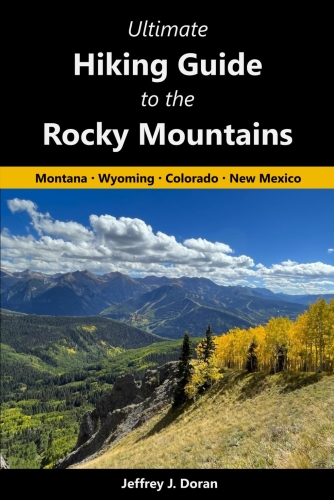
From Montana to New Mexico, the American Rockies stretch for more than a thousand miles. Within this spectacular mountain range are thousands of miles of hiking trails. With such an overwhelming number of options, how will you find and choose the most scenic and rewarding hikes?
Ultimate Hiking Guide to the Rocky Mountains takes all the guesswork out by focusing on some of the most amazing hikes across this range, and provides you with a handpicked list of options that will allow you to make the most of your trips in the Rockies:
Sunday, September 22, 2024
Friday, September 20, 2024
Planning for fall trips to Rocky?
Rocky Mountain National Park posted this blurb on their social media yesterday:
************************************************************************************
Check out our online trail guides:
Planning for fall trips to Rocky? Depending on when you plan to arrive and where you plan to visit, you might need a timed entry reservation.
To visit destinations located along Bear Lake Road, like Moraine Park, Cub Lake, Sprague Lake, and Bear Lake, you will need a Timed Entry + Bear Lake Road reservation between the hours of 5 a.m. to 6 p.m. from now through October 20. These reservations also provide access to all other areas of Rocky Mountain National Park.
If planning to drive over Trail Ridge Road, recreate on the west side of RMNP, explore Wild Basin, walk around Lily Lake or visit any other areas of the park located outside of the Bear Lake Road Corridor, then you will need a Timed Entry (does not include access to Bear Lake Road) reservation between the hours of 9 a.m. to 2 p.m. now through October 14.
To make a Timed Entry reservation, visit www.recreation.gov online, use the Recreation.gov mobile App, or call the Recreation.gov Reservation Center at 1-877-444-6777. If reservations are sold out for your desired arrival date, please know that additional Timed Entry reservations are released the night before at 7 p.m. MDT. It is best to plan ahead when possible. This is a popular time to visit RMNP and night before reservations sell out quickly.
For all additional details, visit the park's website at https://go.nps.gov/romo/timedentry.
************************************************************************************
Check out our online trail guides:
- Glacier National Park: HikinginGlacier.com
- Grand Teton National Park: TetonHikingTrails.com
- Rocky Mountain National Park: RockyMountainHikingTrails.com
Wednesday, September 18, 2024
Rocky Mountain National Park reminds visitors to Be Bear Aware
Rocky Mountain National Park posted this blurb on their social media today:
************************************************************************************
Check out our online trail guides:
#BeBearAware - This is the time of year when bears are actively looking for food and getting ready for winter.
American Black bears (Ursus americanus) are now in hyperphagia, which means they are working to consume 20,000 calories per day to help increase their body fat by 35 percent before they hibernate for the winter. This is the time of year we must all be hyper-vigilant - the reward of unsecured human food can quickly change a bear's natural feeding behavior. You can help save a bear's life by preventing them from obtaining human food, scented items, and garbage.
🐻 Never leave food, trash, or scented items unattended.
🐻 Always lock your vehicles and keep your windows rolled up when you are not in your vehicle. Bears have excellent senses of smell and will open vehicle doors to look for food.
🐻 Do not leave food or coolers in the back of pickup trucks. Remember, pickup truck topper shells and bed covers will NOT stop a bear from entering the back of a pickup to look for food.
🐻 When hiking, keep all food and scented items with you at all times - Do Not leave your pack unattended.
🐻 When going wilderness backpacking camping, all food, cooking equipment, garbage and other scented items must be secured inside a hard sided, commercially-made carry in/carry out bear-resistant food storage canister. Interested in learning more about Black bears? Visit https://www.nps.gov/subjects/bears/black-bears.htm
************************************************************************************
Check out our online trail guides:
- Glacier National Park: HikinginGlacier.com
- Grand Teton National Park: TetonHikingTrails.com
- Rocky Mountain National Park: RockyMountainHikingTrails.com
Monday, September 16, 2024
Colorado Parks and Wildlife secures source population of gray wolves for its second year of reintroduction efforts from British Columbia
In an agreement announced last week between Colorado Parks and Wildlife and the B.C. Ministry of Water, Lands and Resource Stewardship, the Canadian province will be a source for up to 15 wolves for the Colorado gray wolf reintroduction effort for this upcoming winter. These wolves will be captured and translocated between December 2024 and March 2025.
Overall, CPW plans to release 10-15 gray wolves on the West Slope per year, for a total of 3 – 5 years, this being the second year, as outlined in the Colorado Wolf Restoration and Management Plan.
CPW will begin capture operations this winter, with B.C. providing assistance in planning and carrying out the operation.
“We learned a great deal from last year’s successful capture and transport efforts and will apply those lessons this year as we work to establish a self-sustaining wolf population in Colorado,” said CPW Wolf Conservation Program Manager Eric Odell.
Just as last year in Oregon, CPW will be responsible for all costs associated with capture and transport of wolves.
Wolf selection will follow the guidance of the Colorado Wolf Restoration and Management Plan. Animals with major injuries – things like having several broken canines, missing eyes, fractured or missing limbs, mange or lice infection - will not be chosen for reintroduction. CPW will not translocate wolves that are from packs that are currently involved in situations of repeated livestock depredations.
“We are looking forward to working with B.C. and bringing together our combined experience and expertise in an effort that’s a win for both agencies,” said Odell. “Gray wolves from the Canadian Rockies were used for reintroduction in Idaho and Yellowstone. There are no biological differences between wolves in British Columbia and the wolves released in Colorado last year, and the new source population will provide additional genetic diversity to our state’s small but growing wolf population.”
************************************************************************************
Check out our online trail guides:
Overall, CPW plans to release 10-15 gray wolves on the West Slope per year, for a total of 3 – 5 years, this being the second year, as outlined in the Colorado Wolf Restoration and Management Plan.
CPW will begin capture operations this winter, with B.C. providing assistance in planning and carrying out the operation.
“We learned a great deal from last year’s successful capture and transport efforts and will apply those lessons this year as we work to establish a self-sustaining wolf population in Colorado,” said CPW Wolf Conservation Program Manager Eric Odell.
Just as last year in Oregon, CPW will be responsible for all costs associated with capture and transport of wolves.
Wolf selection will follow the guidance of the Colorado Wolf Restoration and Management Plan. Animals with major injuries – things like having several broken canines, missing eyes, fractured or missing limbs, mange or lice infection - will not be chosen for reintroduction. CPW will not translocate wolves that are from packs that are currently involved in situations of repeated livestock depredations.
“We are looking forward to working with B.C. and bringing together our combined experience and expertise in an effort that’s a win for both agencies,” said Odell. “Gray wolves from the Canadian Rockies were used for reintroduction in Idaho and Yellowstone. There are no biological differences between wolves in British Columbia and the wolves released in Colorado last year, and the new source population will provide additional genetic diversity to our state’s small but growing wolf population.”
************************************************************************************
Check out our online trail guides:
- Glacier National Park: HikinginGlacier.com
- Grand Teton National Park: TetonHikingTrails.com
- Rocky Mountain National Park: RockyMountainHikingTrails.com
Friday, September 13, 2024
SAR unable to reach hiker who fell to their death on Arikaree Peak
On August 28, 2024, the Grand County Sheriff’s Office and Grand County Search and Rescue were contacted by Boulder County in reference to a hiker who had fallen approximately 300 – 400 feet off of Arikaree Peak into Grand County.
An initial recovery attempt involved a coordinated response from Grand County Search and Rescue, the Grand County Sheriff’s Office, Boulder County Emergency Services, Colorado Hoist Rescue Team (CHRT), Rocky Mountain Rescue Group, Colorado Search and Rescue, the Colorado Army National Guard, and the Alpine Rescue Team. Adverse weather conditions and dangerous terrain prevented the teams from safely reaching the hiker. A physician aboard the helicopter during the initial attempt had determined that the hiker had not survived the fall.
On September 6, a second attempt was made by Grand County Search and Rescue, the Alpine Rescue Team, Rocky Mountain Rescue Group, and Med Evac. However, the steep, rugged terrain surrounding Arikaree Peak once again made conditions too dangerous for a recovery.
“Our teams made every possible effort to safely reach the site of the fall, but conditions remain too dangerous for us to proceed,” said Greg Foley, Grand County Search and Rescue Field Director. “The safety of our personnel must come first.
After careful assessment, a final multi-agency decision was made to halt further recovery efforts, as the extreme risks posed to team members outweighed the potential for a safe retrieval. The Grand County Sheriff’s Office and Grand County Coroner’s Office have been in contact with the victim’s family. This incident underscores the dangers of backcountry travel in technical terrain and the extreme challenges of rescue operations in such remote areas.
The hiker has not been identified.
************************************************************************************
Check out our online trail guides:
An initial recovery attempt involved a coordinated response from Grand County Search and Rescue, the Grand County Sheriff’s Office, Boulder County Emergency Services, Colorado Hoist Rescue Team (CHRT), Rocky Mountain Rescue Group, Colorado Search and Rescue, the Colorado Army National Guard, and the Alpine Rescue Team. Adverse weather conditions and dangerous terrain prevented the teams from safely reaching the hiker. A physician aboard the helicopter during the initial attempt had determined that the hiker had not survived the fall.
On September 6, a second attempt was made by Grand County Search and Rescue, the Alpine Rescue Team, Rocky Mountain Rescue Group, and Med Evac. However, the steep, rugged terrain surrounding Arikaree Peak once again made conditions too dangerous for a recovery.
“Our teams made every possible effort to safely reach the site of the fall, but conditions remain too dangerous for us to proceed,” said Greg Foley, Grand County Search and Rescue Field Director. “The safety of our personnel must come first.
After careful assessment, a final multi-agency decision was made to halt further recovery efforts, as the extreme risks posed to team members outweighed the potential for a safe retrieval. The Grand County Sheriff’s Office and Grand County Coroner’s Office have been in contact with the victim’s family. This incident underscores the dangers of backcountry travel in technical terrain and the extreme challenges of rescue operations in such remote areas.
The hiker has not been identified.
************************************************************************************
Check out our online trail guides:
- Glacier National Park: HikinginGlacier.com
- Grand Teton National Park: TetonHikingTrails.com
- Rocky Mountain National Park: RockyMountainHikingTrails.com
Subscribe to:
Posts (Atom)
