Monday, March 13, 2017

Winter in Rocky Mountain National Park

Winter is an absolutely wonderful time to visit Rocky Mountain National Park. The park, as well as the area surrounding it, offers many outstanding outdoor opportunities, including snowshoeing, cross-country skiing, sledding, downhill skiing, wildlife watching, dog sled rides, fat biking, ice fishing and even hiking. Even if you don’t own your own equipment there are many outfitters in Estes Park and Grand Lake that will rent everything you’ll need to enjoy your adventures.

Winter in the Rockies can typically last from November through April. The lower elevations along the eastern slope of Rocky Mountain National Park are usually free of deep snow. However, at higher elevations, arctic conditions prevail. Sudden blizzards, high winds, and deep snowpack are common in these areas of the park. The west side of the park usually experiences more snow, less wind and clear cold days during this time period. Skiing and snowshoeing conditions are usually at their best in January, February, and March. Unpredictable weather alternates between warm and cold, wet and dry conditions during April.

Based on the latest ten years of precipitation data, Estes Park (7522 feet) receives approximately 34 inches of snow each year, while Grand Lake (8369 feet) receives roughly 147 inches annually.

Visitors to the park should make note that the upper portion of Trail Ridge Road is closed during the winter. Depending on weather, the road usually closes for the season around mid-October or early-November, and reopens by Memorial Day Weekend. During the winter season, weather permitting, Trail Ridge Road is normally open to Many Parks Curve on the east side of the park, and to the Colorado River Trailhead on the west side. For the latest information on closures you can call the Trail Ridge Road Status Line at 970-586-1222, or visit the park website.

The following are a few of the winter adventures you can enjoy in and around the national park:

Snowshoeing – is one of the most popular ways to enjoy the park and surrounding areas during the winter. Basically, if you can hike, you can snowshoe! Within the park you can join a ranger-led snowshoe excursion. Several outings are offered throughout the winter. Participants will learn techniques to traverse various terrain as they explore the natural world of subalpine forests. No previous experience is needed for these programs. Outside of the park are several other areas you can explore. On the west side you may want to note that 70% of Grand County is public land. Therefore, snowshoers will have access to hundreds of miles of trails in the Indian Peaks Wilderness, Never Summer Wilderness, Arapaho National Forest, Arapaho National Recreation Area, Byers Peak Wilderness, Vasquez Peak Wilderness, Medicine Bow/Routt National Forest, Winter Park and Fraser Valley areas. You can find additional information on these areas, as well as equipment rental outfitters and various Nordic centers by clicking here. For information on equipment outfitters and snowshoeing opportunities in the Estes Park area, please click here.

Cross-country Skiing – is another popular winter sport in and around the park. On the west side of the park, Rocky Mountain National Park rangers offer the "Ski the Wilderness in Winter" program each winter. Cross-country skiers also have access to trails in the Indian Peaks Wilderness, Never Summer Wilderness, Arapaho National Forest, Arapaho National Recreation Area, Byers Peak Wilderness, Vasquez Peak Wilderness, Medicine Bow/Routt National Forest, Winter Park and Fraser Valley areas. You can find additional information about these areas, as well as equipment rental outfitters and various Nordic centers by clicking here.

Although the terrain and the amount snow on the west side of the park make for better cross-country skiing, the Estes Park area also offers many cross-country skiing opportunities as well. For additional information on these opportunities, as well as equipment rental outfitters on the east side of the park, please click here.

Hiking – Depending on the amount of snow on the ground, visitors can also enjoy hiking in the park, especially on the east side. Destinations such as Cub Lake, Chasm Falls, Deer Mountain, Gem Lake and Upper Beaver Meadows are all great choices during the winter. For more information about these hiking destinations in winter, please click here.

Sledding - Hidden Valley is the one place in Rocky Mountain National Park where sledding is allowed. Please note that no tows are provided, and you must provide your own plastic sled, saucer, or tube (if you don't bring your own they can be rented in Estes Park at most outdoor shops). This gentle hill is at the bottom of the bunny slope of the former Hidden Valley Ski Area. On most weekends there's an attendant here. A warming room is also available. Winter winds can scour the area, causing conditions to vary, so you should call the park Information Office at 970-586-1206 for the latest information.

Wildlife Watching - Many park roads are usually open during the winter, which provide access for viewing park wildlife. Winter is an especially good time to look for elk, mule deer, moose, and other large mammals. Visitors should look for moose along the Colorado River on the park's west side. Elk and mule deer are most active at dusk and dawn, and are usually seen in meadow areas. Look for bighorn sheep along the Highway 34/Fall River corridor on the park's east side. Coyotes may be seen any time of day. Members of the Jay family, including Steller's jays, gray jays, Clark's nutcrackers, and the iridescent, long-tailed black-billed magpies are commonly seen in the winter as well.

Other Outdoor Activities – in addition to the winter activities already mentioned above, the Grand Lake area offers several other winter adventures, including downhill skiing, dog sled rides, fat biking, ice fishing, ice skating, sledding and snowmobiling, among many other options. You can click here for a full list of winter activities.

Before venturing into the park during the winter months be sure you’re properly prepared for cold and snowy conditions. Be sure to layer up with insulating, waterproof clothing, wear sunglasses, use sunscreen, carry water and carry a good topographical trail map.

Other info:

For the latest information on weather conditions, please click here.

* Current Bear Lake Snow Conditions

* Overall Trail Conditions

* Colorado Avalanche Information

If you do plan to visit Rocky Mountain this winter, or anytime of the year, please note that our hiking website also offers a wide variety of accommodation listings and other things to do to help with all your vacation planning.


                *******************************************************************************

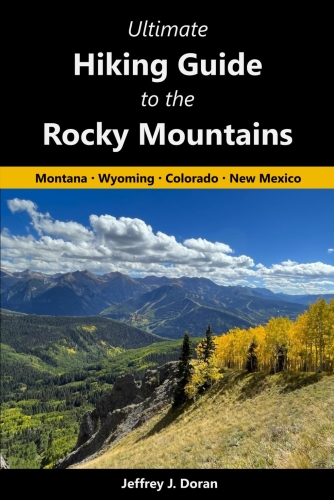
From Montana to New Mexico, the American Rockies stretch for more than a thousand miles. Within this spectacular mountain range are thousands of miles of hiking trails. With such an overwhelming number of options, how will you find and choose the most scenic and rewarding hikes?

Ultimate Hiking Guide to the Rocky Mountains takes all the guesswork out by focusing on some of the most amazing hikes across this range, and provides you with a handpicked list of options that will allow you to make the most of your trips in the Rockies:

Saturday, March 11, 2017

Molly Lake Trailhead and Some Trails Temporarily Closed

The Canyon Lakes Ranger District of the Roosevelt National Forest is expecting to temporarily close an area east of the Manhattan Road (County Road 69) starting as soon as March 14, 2017, for public safety due to tree removal in the area. Molly Lake Trail and Trailhead will be closed, as well as a portion of Granite Ridge Trail and a small portion of Molly Moon Trail. Forest Service Road 509 and 509.1, often used for dispersed camping, are also impacted.

Crews will be removing many dead trees and thinning live trees in an effort to reduce hazardous fuels and improve safety in the Molly Lake area. The closure is located south of Red Feather Lakes, east of the Manhattan Road. For a map of the closure, click here. The area closure is necessary, as heavy equipment and logging trucks will be working throughout this landscape. Some equipment used can throw chunks of wood and rocks with great force, posing a serious threat to those in the area.

It should also be noted that log trucks will be utilizing the Manhattan Road and the Red Feather Lakes Road (County Road 74E). Drivers in this area should be cautious around these large vehicles. Signs will be posted in the area when and where work is taking place.

This closure is likely to be an inconvenience to some forest visitors; however, it is imperative for public safety that the area is closed to public access. There are other trails in this general area that remain open for visitors, including Elkhorn and Lady Moon trails. Visitors can also contact our information office at 970-295-6700 or clrdvis@fs.fed.us for ideas on alternative areas to enjoy.


Jeff
RockyMountainHikingTrails.com
TetonHikingTrails.com
HikinginGlacier.com
HikingintheSmokys.com

Wednesday, March 8, 2017

The Top 6 Reasons to Visit the Great Smoky Mountains

The Great Smoky Mountains is the most visited park in the country. More than 10 million people visit the park each year to take-in the spectacular scenery. Although it may seem crowded during certain seasons, it’s very easy to escape the crowds by heading off on one of the more than 800 miles of trails. Here’s a quick rundown on why the Smokies are a hiker’s paradise.

Fall Colors
The Great Smoky Mountains are one of the best places in the country to see fall colors. From late September through early November autumn slowly creeps down from the highest elevations to the lowest valleys in the park. As a result of its rich diversity of trees – roughly 100 species of native trees live in the Smokies - park visitors will enjoy a myriad of colors, from spectacular reds and oranges, to brilliant golds and yellows. Although driving along the park roads is a popular way of seeing fall colors, hiking amongst the trees is by far the best way to enjoy them. At any point during the autumn cycle almost every trail will offer great viewing opportunities. We’ve published a guide that highlights some of the best trails as the season progresses.


Grassy Balds
One of the great mysteries of the Southern Appalachians, which includes the Great Smoky Mountains, is whether or not the treeless mountain tops and ridges, known as “balds,” are natural or if they were manmade. No one knows for certain how they came into existence. Even their age is unknown. The general consensus, however, seems to be that the early settlers in the region cleared many of these areas for grazing purposes so that the lower elevations could be used for growing crops during the summer months. Some of the best examples of grassy balds in the Smokies include Gregory Bald, Spence Field, Russell Field, Silers Bald, Andrews Bald, Parsons Bald and Hemphill Bald. However, Andrews Bald and Gregory Bald are the only two balds that are maintained by the park. The others have been left to eventually be reclaimed by forest.

One of the great annual events in the Southern Appalachians is the spectacular flame azalea, mountain laurel and rhododendron blooms of late spring. Some of the best examples of these beautiful displays from Mother Nature occur atop these balds. In particular, Gregory Bald, Andrews Bald, Spence Field and Rocky Top offer some of the best displays of these flowers. Moreover, these are among the best hikes in the park, all of which offer sweeping panoramic views of the Smoky Mountains.


The Mt. LeConte Lodge
Although there are a handful of other national parks that offer hike-in lodging, one of the great traditions in the Great Smoky Mountains is an overnight excursion at the Mt. LeConte Lodge. Sitting near the top of 6593-foot Mount LeConte, the lodge offers an excellent opportunity to enjoy a backcountry experience in relative luxury (compared to roughing it!) for those that don’t like to backpack. The only way to reach the lodge is by taking one of 6 trails that meander up the third highest mountain in the park. The most popular route is the Alum Cave Trail. If you take the Trillium Gap Trail don't be surprised to see a pack-train of llamas. The lodge is resupplied by llamas with fresh linens and food three times a week.


Early Settler History
The Great Smoky Mountains has done an excellent job of preserving its rich history of settlement prior to becoming a national park. All across the valleys, from Cades Cove, Elkmont, Big Creek, Smokemont, Deep Creek and everywhere in between, you can find the homes, farms and churches of the early settlers, as well as the remnants and relics leftover from the Civilian Conservation Corp in the 1930s, and the logging boom of the early 1900s. There are many outstanding hikes that visit these historical sites, including the Rich Mountain Loop, which visits the home of John Oliver, a veteran of the War of 1812. He and his young family were among the first white settlers to settle in the Cades Cove area. His cabin dates from the 1820s and is one of the oldest structures in the Great Smoky Mountains. You could also take the Little Brier Gap Trail to visit the Walker Sisters Place, the home of the five Walker sisters. The last surviving sister was one of the last remaining homesteaders to live within the park boundaries.


Waterfalls
On average the lower elevations of the Smokies receive roughly 55 inches of rainfall each year, while the highest peaks receive more than 85 inches, which is more than anywhere else in the country except the Pacific Northwest. With all that rain the park is naturally blessed with an abundance of streams. Using modern mapping technology scientists have recently determined that the park contains roughly 2900 miles of streams. With elevations ranging between 6643 feet 840 feet, there are several waterfalls located throughout the park. Grotto Falls has the distinction of being the only waterfall that you can walk behind. Although Abrams Falls is arguably the most scenic and impressive waterfall in the Smokies, I personally like the hike along the Middle Prong Trail to Indian Flats Falls.


Wildflowers
The Great Smoky Mountains are home to more than 1600 species of flowering plants. During each month of the year some forb, tree or vine is blooming in the park. During the spring wildflowers explode during the brief window just prior to trees leafing out and shading the forest floor (from about mid-April thru mid-May). Although there are many parks that are larger, the Great Smoky Mountains has the greatest diversity of plants anywhere in North America. In fact, north of the tropics, only China has a greater diversity of plant life than the Southern Appalachians. Wet and humid climates, as well as a broad range in elevation, are two of the most important reasons for the park's renowned diversity. Hikers can enjoy wildflowers on almost any trail in the park. We’ve published a guide that highlights some of the best wildflower hikes during the spring season.


With more than 800 miles of trails meandering throughout the park, hiking is the absolute best way to see the Great Smoky Mountains National Park. In addition to the hikes listed above, the park offers a variety of other outstanding hikes. If you do plan to visit the Smokies this year, please note that our hiking website also offers a wide variety of accommodation listings to help with all your vacation planning.


Jeff
RockyMountainHikingTrails.com
TetonHikingTrails.com
HikinginGlacier.com
HikingintheSmokys.com

Friday, March 3, 2017

Temporary Closures In 2017 To Protect Nesting Raptors

Each year to protect raptor nesting sites, Rocky Mountain National Park officials initiate temporary closures in the Lumpy Ridge and Sheep Mountain areas of the park. To ensure that these birds of prey can nest undisturbed, specific areas within the park are closed temporarily to public use during nesting season and monitored by wildlife managers. All closures began on March 1 and will continue through July 31, if appropriate. These closures may be extended longer or rescinded at an earlier date depending on nesting activity.

Closures include Checkerboard Rock, Lightning Rock, Batman Rock, Batman Pinnacle, Sundance, Thunder Buttress, The Parish, Alligator Rock, Sheep Mountain, and Twin Owls, Rock One. These closures include the named formations. Closures include all climbing routes, outcroppings, cliffs, faces, ascent and descent routes and climber access trails to the named rock formations. Check the park’s website at www.nps.gov/romo/planyourvisit/area_closures.htm for updated information on raptor closures.

The National Park Service is committed to preserving birds of prey. The same cliffs that are critical for raptors also appeal to climbers. The cooperation of climbing organizations and individuals continues to be essential to the successful nesting of raptors in the park.

The series of trails that circumnavigate Lumpy Ridge, known as the Lumpy Ridge Loop, will remain open during this time period.


Jeff
RockyMountainHikingTrails.com
TetonHikingTrails.com
HikinginGlacier.com
HikingintheSmokys.com

Wednesday, March 1, 2017

Mountains 101: A Free Online Learning Experience

Parks Canada, in partnership with the University of Alberta, has recently announced the launch of Mountains 101, a free online series of courses that will provide a comprehensive overview of mountain studies. Mountains 101 was designed to inspire people around the world to learn and explore Canada’s mountain heritage, and to understand how Parks Canada protects, conserves and shares these special places.

Mountains 101­­ is a 12-lesson Massive Open Online Course (MOOC) teaching a comprehensive overview of Mountain Studies. It will cover an interdisciplinary field of study focusing on the physical, biological, and human dimensions of mountain places in Alberta, Canada, and around the world. The course will provide online students with a broad and integrated overview of the mountain world, including:

• the geological origins of mountains, how they’re built-up and worn-down over time
• the importance for biodiversity and water cycles, globally and locally
 • the cultural significance of mountains to societies around the globe, and how that relationship has evolved over time
• how mountains are used, and how they’re protected

Mountains 101­­ will also share general tips and tricks to safely enjoy time in the high alpine environment. Outdoor experts will also provide a smart and useful "Tech Tip" at the end of every lesson -- from how to pick the best footwear for hiking, to making smart decisions in avalanche terrain.

For more information on the course and to sign-up, please click here.


Jeff
RockyMountainHikingTrails.com
TetonHikingTrails.com
HikinginGlacier.com
HikingintheSmokys.com