Encompassing more than 265,000 acres, and with more than sixty peaks topping out above 12,000 feet, Rocky Mountain National Park is home to some of the most spectacular scenery on Earth. From wooded forests to alpine tundra, these majestic mountains provide habitat to more than 60 species of mammals, while more than 280 species of birds visit or reside within the park. With more than 350 miles of trails meandering throughout the park, Rocky Mountain is also widely recognized as a hiker’s paradise. Here are five great reasons why you should visit Rocky Mountain:
The Continental Divide
One of the best things about Rocky Mountain National Park is its accessibility to the high country. No other park in the country allows visitors to gain lofty elevations so easily. Roughly one-third of the park is above tree-line, and more than 60 peaks top out above 12,000 feet, including 14,259-foot Longs Peak, the highest peak in the park. In addition to trails like the Flattop Mountain Trail or the route to Mt. Ida, visitors can drive over the Continental Divide along the highest continuous paved road in North America. With a maximum elevation of 12,183 feet, and more than eight miles traveling above 11,000 feet, Trail Ridge Road connects Estes Park with Grand Lake. The road also provides access to several outstanding tundra hikes, such as the Ute Trail, the Tundra Communities Trail and the Alpine Ridge Trail. Each of these are categorized as easy or moderate hikes, but don't forget to acclimate first!
Wildflowers
Wet springs can bring exceptional wildflower seasons to Rocky Mountain National Park. Even during normal years the park explodes with a variety of wildflowers. Some of the varieties visitors might enjoy include Alpine Clover, Rock Primrose, Western Wallflower, Sky Pilot and Alpine Sunflowers in the tundra areas of the park, as well as Mountain Iris, Lupine, Mariposa-lily and Colorado Columbines in the lower elevations. Some of best wildflower hikes include Big Meadows, Cascade Falls, Emerald Lake and the Lumpy Ridge Loop, among many others.
Longs Peak
At 14,259 feet, Longs Peak is the highest mountain in Rocky Mountain National Park. The iconic sentinel is seen from almost anywhere in the park, as well as from many locations around northern Colorado. It’s also one of most popular “fourteeners” for hikers and climbers to tackle in a state that boasts 53 peaks that rise above 14,000 feet. Although considered a mountaineering route, thousands of hikers attempt to summit the peak each summer using the famous Keyhole Route. Personally, I don’t want anything to do with the narrow ledges and steep cliffs along the upper portions of the route. I much prefer safer climbs such as Hallett Peak and the Chapin-Chiquita-Ypsilon Mountains to cure my big mountain summit fever.
Elk Rut
The annual elk rut is one of the premier attractions in Rocky Mountain National Park. Each fall elk descend from the high country to the lower elevation meadows during the annual breeding season. During the rut, bull elk compete with one another for the right to breed with herds of females. Mature bulls compete for cows by bugling, posturing, displaying their antlers and herding, while occasionally fighting off young challengers. The peak season for the rut generally lasts from mid-September to mid-October in Rocky Mountain National Park.
Fall Aspens
Just as the elk rut is kicking into high gear, another annual event that draws tourists to the park during the autumn are the brilliant fall colors of aspens. Each September the leaves of quacking aspens turn from green to orange and golden yellow throughout the park. Some of best hikes for viewing fall aspens include Bierstadt Lake, Alberta Falls, Cub Lake, Finch Lake, Adams Falls and Chasm Lake, among many others.
In addition to the hikes discussed above, Rocky Mountain National Park has many other outstanding hikes that take-in the best scenery the park has to offer. If you do plan to visit Rocky Mountain this year, please note that our hiking website also offers a wide variety of accommodation listings and other things to do to help with all your vacation planning.
*******************************************************************************
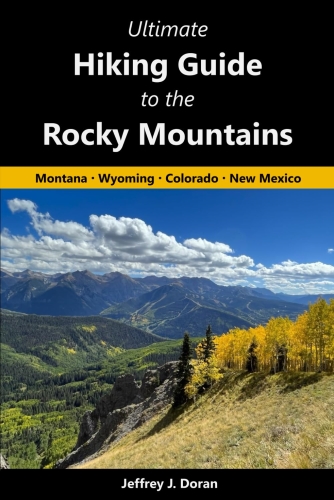
From Montana to New Mexico, the American Rockies stretch for more than a thousand miles. Within this spectacular mountain range are thousands of miles of hiking trails. With such an overwhelming number of options, how will you find and choose the most scenic and rewarding hikes?
Ultimate Hiking Guide to the Rocky Mountains takes all the guesswork out by focusing on some of the most amazing hikes across this range, and provides you with a handpicked list of options that will allow you to make the most of your trips in the Rockies:
Showing posts with label elk. Show all posts
Thursday, December 12, 2024
Tuesday, August 12, 2014
Make Plans Now for a Great Fall Hiking Trip to Rocky Mountain National Park
Rocky Mountain National Park is a great place to visit anytime of the year, but during the fall it's an especially wonderful time. In addition to weather that is usually spectacular, and with fewer crowds, hikers will have many options for viewing beautiful autumn colors, such as cottonwood trees, but especially those of quaking aspens.
Roughly 60% of Rocky Mountain National Park is covered by forest, and most of that area falls below 11,000 - 11,500 feet in elevation. Above that range is alpine tundra, where no trees grow. It's in these subalpine and montane zones below 11,000 feet that park visitors and hikers will have the opportunity to view fall aspens. Aspens first begin changing their colors in the subalpine zone (9,000-11,000 feet) in early September. Progressively, color changes reach the montane zone (5,600-9,500 feet) by mid-month. The peak of the "gold rush" in Rocky Mountain National Park is usually around late September.
There are many great hikes that offer opportunities for checking out aspens in all their shimmering golden yellow and orange glory. Here are just a few suggestions:
East Side Hikes:
Alberta Falls, Bear Lake Loop, Bierstadt Lake, Cub Lake, Fern Falls, Fern Lake, Finch Lake, Gem Lake, Lumpy Ridge Loop, as well as the The Keyhole on Longs Peak.
West Side Hikes:
Adams Falls, the Green Mountain Loop, Lake Verna, Lone Pine Lake and Spirit Lake.
And, just in case you needed another reason, the fall is the only time to see the elk rut when bull male elk strut around the meadows and let out high-pitched squeals, known as a "bugle". This elk bugling season runs from roughly mid-September through mid-October. The meadows in the Kawuneeche Valley and in Moraine Park are both outstanding places to witness one of natures most awesome shows.
If you do plan on visiting Rocky Mountain this fall, please note that our website offers a wide variety of accommodation listings for both Estes Park and Grand Lake to help with all your vacation planning.
Jeff
RockyMountainHikingTrails.com
Tuesday, October 8, 2013
Titanic Battle Between Two Bull Elk Caught on Film
Check out this heavyweight bout between two bull elk. Would you say the photographer got just a little too close?
Jeff
RockyMountainHikingTrails.com
Jeff
RockyMountainHikingTrails.com
Tuesday, August 27, 2013
RMEF Grant to Help Wolf Management in Wyoming
The Rocky Mountain Elk Foundation recently announced that a $50,000 grant from the organization will assist the Wyoming Game and Fish Department (WGFD) with its wolf management plan.
The funding will expand WGFD’s knowledge of predator-prey interactions between wolves and elk. It will also expand the radio collar program to help managers better understand the home range, territory size, pack size and other biological traits and actions of the wolf so they can better implement management techniques.
“It is vital that state agencies have a firm grasp on predator populations in order to properly implement science-based management practices,” said David Allen, RMEF president and CEO. “This grant will help WGFD gain more knowledge to better understand its wolf population so it can better implement its approved wolf management plan.”
"Our partnership with the RMEF is extremely valuable to us and this grant shows how this relationship continues to develop great opportunities for conservation," said Tom Ryder, Wildlife Assistant Division Chief for WGFD. “This grant will help the Department execute its adaptive wolf management plan by helping to increase our knowledge of wolf/elk interactions, wolf home range, and pack and territory size. Each of these biological components is important for the management plan and to our shared constituents."
In keeping with the North American Model of Wildlife Conservation, RMEF supports state-regulated hunting and trapping as the preferred tools of wolf management. RMEF staunchly supports management to balance and control wolf populations.
RMEF also remains committed to learning more about wolves through research efforts. Since 1989, RMEF invested nearly $664,000 in research grants to advance scientific understanding of wolves, wolf interactions with other species, and overall wolf management. The total includes $174,079 in Wyoming-specific research projects and more than $200,000 in science grants in just the past five years. Most of the contributions paid for independent research by leading universities, state and federal wildlife conservation agencies and tribes.
“Part of RMEF’s mission is to ensure the future of elk and other wildlife,” said Allen. “This grant helps managers do just that in Wyoming by helping them know how many wolves are out there, where they travel and what effect they have on elk, deer and other ungulates.”
RMEF will allocate nearly $2.9 million for elk and wildlife-related conservation projects in 27 states with wild, free-ranging elk populations in 2013. Additionally $570,000 will also be allocated to hunting heritage programs in 49 states.
Jeff
RockyMountainHikingTrails.com
Friday, April 12, 2013
Video: Hundreds of Elk in Migration
Check out this video of hundreds of elk - presumably in migration - crossing a road in Drake, Colorado (just east of Estes Park). What makes this video so amazing is that during the span of the 4.5 minute clip, there's a constant flow of elk crossing the road. It's obvious that the flow started before the video began, and continued afterwards (someone in the comments section said they counted 241 elk):
Jeff
RockyMountainHikingTrails.com
Jeff
RockyMountainHikingTrails.com
Subscribe to:
Posts (Atom)


