In 1903, a 26-foot high earthen dam was built at Lawn Lake in Rocky Mountain National Park to enhance the natural lake from 16.4 acres to 48 acres. This was done to help with crop irrigation in the Loveland area. Nearly 80 years later, on July 15, 1982, the dam catastrophically failed, which released more than 300 million gallons of water down the Roaring River valley. Some witnesses claim the failure created a wall of water 25 to 30 feet high! As the water ripped through the landscape, it created the Alluvial Fan near the confluence with Fall River in Horseshoe Park. After killing three campers, the water rushed down Elkhorn Avenue in Estes Park (see photos below) before stopping at Lake Estes. In all, damages to the area totaled roughly $31 million. Even today, sections of the Roaring River's high gully walls remain unstable and prone to sudden collapse. The dam failure led to the removal of three other man-made dams within the park, including Pear Lake, Sandbeach Lake and Bluebird Lake.
Evidence of some of the destruction from the infamous Lawn Lake Flood are still on display along the Lawn Lake Trail, but the lake itself appears to have fully recovered. In my opinion, it's one of the more scenic lakes in the park.
Photos courtesy of the Denver and Coloradoan Libraries.
*******************************************************************************
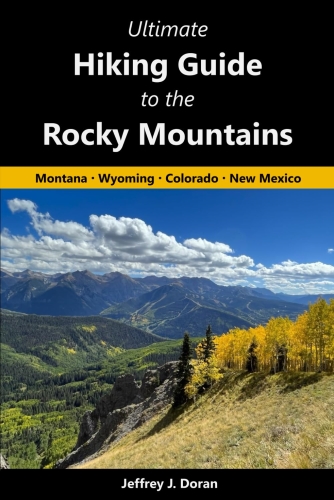
From Montana to New Mexico, the American Rockies stretch for more than a thousand miles. Within this spectacular mountain range are thousands of miles of hiking trails. With such an overwhelming number of options, how will you find and choose the most scenic and rewarding hikes?
Ultimate Hiking Guide to the Rocky Mountains takes all the guesswork out by focusing on some of the most amazing hikes across this range, and provides you with a handpicked list of options that will allow you to make the most of your trips in the Rockies:
Showing posts with label Estes Park. Show all posts
Tuesday, March 19, 2024
Wednesday, November 17, 2021
Kruger Rock Fire Update: Pilot killed, Cause of fire announced
On November 16, 2021, at approximately 6:37 p.m., the Larimer County Sheriff's Office received reports of a single engine air tanker crash south of Estes Park. Resources were immediately deployed to search the area. At approximately 9:49 p.m., the plane crash site was located near the south end of Hermit Park. Larimer County is reporting that the pilot and only occupant of the aircraft did not survive. The investigation into the crash will be led by the FAA and NTSB.
On November 16, 2021, at about 6:50 a.m., a small wildfire was reported near Little Valley Road and Fish Creek Road southeast of Estes Park. Multiple resources responded and found the fire burning in very steep terrain. Gusting winds and low relative humidity caused the fire to spread quickly and threatened several structures in the area. Multiple voluntary and mandatory evacuations were ordered during the day and notifications were sent to 1,644 contacts (not individuals or homes). No structure damage has been reported.
Despite the gusting winds, air resources were utilized to make water and suppressant drops. More air resources have been ordered for today along with additional fire crews.
As of 6:20 p.m. last night, the fire was estimated at 133 acres with 15% containment.
An investigation into the cause of the fire has revealed high winds blew a tree onto a nearby powerline causing it to arc and start the fire.
You can follow updates here: https://www.larimer.org/kruger-rock-fire
Additional information:
* The Canyon Lakes Ranger District announced this morning that the U.S. Forest Service & Larimer County will assume unified command of the Kruger Rock Fire.
* The Canyon Lakes Ranger District also announced that the Roosevelt National Forest has closed lands south and east of Estes Park. See closure map here: https://www.fs.usda.gov/Internet/FSE_DOCUMENTS/fseprd972833.pdf
* Last night, Rocky Mountain National Park made this announcement: "In an abundance of caution, due to the Kruger Rock Fire, RMNP, in conjunction with the USFS, is closing the Twin Sisters area. This closure includes the Twin Sisters Trail and parking area. The Lily Lake area remains open."
Jeff
RockyMountainHikingTrails.com
HikinginGlacier.com
TetonHikingTrails.com
Ramble On: A History of Hiking
Exploring Glacier National Park
Exploring Grand Teton National Park
Tuesday, September 2, 2014
The Grand Old Man of Estes Park
Freelan Oscar Stanley, inventor of the Stanley Steamer automobile, first came to Estes Park in 1903 on doctor’s orders. Impressed by the beauty of the valley and grateful for the improvements to his health, Stanley decided to invest his money and his future in the budding tourist community.
Freelan, and his twin brother Francis, were both accomplished inventors and both considered to be geniuses. Together they founded the Stanley Motor Carriage Company after selling their photographic dry plate business to the Eastman Kodak Company. Their first automobiles, known as Stanley Steamers, were built in 1897 and relied on steam power. Demonstrating their rivalry with gasoline powered vehicles, one of the Stanley models set the world record for the fastest mile in an automobile in 1906. Clocking in at 127.6 miles per hour that day, the record stood until 1911.
In 1903, at the age of 53, Freelan was advised by his doctor to visit Colorado. Suffering from tuberculosis, the doctor told him not to make any plans beyond the autumn, expecting the disease to take his life within the next several months. Stanley's summer vacation in Estes Park, however, put him back on the road to good health. Soon he moved to Estes Park and purchased 160 acres of land where he would build a luxurious hotel for vacationing Easterners. Stanley designed the hotel, as well as the manor house, casino building, concert hall, tennis courts, 9-hole golf course, trap shooting range and eventually an airfield for small planes.
This photo of the Stanley was taken by H. T. Cowling and appeared in the National Park Portfolio of 1916/1917:
At a cost of more than a half-million dollars the resort opened in June of 1909. Some of the early guests to visit the Stanley Hotel included J.C. Penney, Harvey Firestone, Dr. William Mayo and Theodore Roosevelt.
In that same year Freelan built a hydroelectric plant along the Fall River, which allowed the hotel to claim it was the first in the country "to heat, light, and cook meals exclusively with electricity…" Eventually his plant would provide electricity to the growing citizenry in Estes Park. Within just a few years the influential Freelan O. Stanley was earning the reputation as "The Grand Old Man of Estes Park."
The hydroelectric plant would supply electricity to Estes Park until July 15, 1982. On that day the Lawn Lake Dam broke and sent 300 million gallons of water down the Roaring River valley and killing three campers, before rushing down Fall River Road and destroying the plant’s power generating capabilities. Twenty years later the plant would reopen as the Estes Park Historical Museum.
Despite the dire prognosis from his doctor, Freelan would live another 37 years before dying in 1940 at the age of 91.
Several decades after his death, the Stanley Hotel became famous once again when novelist Stephen King found his inspiration for "The Shining" after staying in an almost empty hotel on the night before it closed for the winter. Although the hotel wasn’t used in the movie, it was used as a backdrop for the three-part 1997 television mini-series.
In more recent years the hotel has gained notoriety as one of America's most haunted hotels. Numerous stories from visitors and staff have reported seeing Stanley's ghost, or his wife's ghost. Visitors today can take the Ghosts & History Tour, and possibly encounter the mysterious apparitions for themselves.
In the lobby the Stanley Hotel proudly displays this 1906 Model EX, 10 HP Runabout. This model came equipped with both a 26-gallon water tank and a 13-gallon gas tank. The gas was used to heat the water in the boiler, and could take up to a half-hour before it generated enough steam to power the car. This model weighed 1000 pounds, could achieve speeds of 45 MPH, and would have set you back a cool $850 back in the day! (my guess is that to purchase this same car now you would likely have to add at least 2 zeroes to that figure)
Jeff
RockyMountainHikingTrails.com
Friday, May 30, 2014
Volunteering needed for flood-damaged trails near Estes Park
As part of the flood recovery process, the Poudre Wilderness Volunteers (PWV) are continuing to help the Forest Service by coordinating volunteer trail work. The next scheduled trail restoration workday open to the public is June 14-15 for the Lion Gulch Trail near Estes Park.
The outpouring of support for recovery work has been greatly appreciated; however, this work has to be carefully coordinated. There are many crews helping the Forest repair and recover from the September 2013 floods and this work must be organized, prioritized, and meet the various requirements of the U.S. Forest Service. All work done on National Forest System lands must be approved by the forest before occurring.
PWV is the key contact for the Canyon Lakes Ranger District for public work days. PWV works closely with the Forest Service and are trained by the forest in trail restoration.
Volunteers of all skill levels can participate, but must be at least 18 years old. Work includes moving rocks and downed trees, reestablishing the trail and helping with drainage issues. Some work has already been done on portions of this trail to help make the area safer for volunteers. Volunteers spent a wet Memorial Day weekend working on the trail, but there is still much more to do.
Damage done to the first few miles of this trail was bad, but nothing compared to the middle part of the trail, where the trail is all but gone. Some analysis will be needed before this portion of the trail can be fully repaired. The Lion Gulch Trail will remain closed even after this volunteer trail work, until its length is safe for the public.
Those wanting to volunteer can sign up online. Details will be provided when volunteers sign up. Volunteers need to wear long sleeved shirts and pants (no shorts) and work boots. Be sure to bring water and snacks. Hard hats, gloves and tools will be provided.
More volunteer trail work days could be planned in the future. For additional work about flood recovery efforts or future events on the Arapaho and Roosevelt National Forests and Pawnee National Grassland, please click here.
Jeff
RockyMountainHikingTrails.com
Sunday, December 8, 2013
Drone Video: Estes Park from the Sky
ColoradoSky published this video the other day. Taken from a drone, the short film shows-off the snow-covered mountains surrounding Estes Park. ColoradoSky notes on his page that "Zero degrees numbed my fingers and limited my time in the air to just a few minutes, but I had to take a quick look. From the overlook on Hwy 36 entering Estes Park."
As drone technology spreads, this is likely only the beginning of this genre of film making:
2013-12-5 Snow and cold in Estes Park, but oh it's beautiful! from ColoradoSky on Vimeo.
Jeff
Rocky Mountain Hiking Trails
As drone technology spreads, this is likely only the beginning of this genre of film making:
2013-12-5 Snow and cold in Estes Park, but oh it's beautiful! from ColoradoSky on Vimeo.
Jeff
Rocky Mountain Hiking Trails
Tuesday, September 24, 2013
Four Ways to Help the Colorado Flood Victims
There are at least 4 ways you can directly help the victims of the recent floods in Colorado - at least those in the Estes Park area. If you know of others, please leave a comment or send me an email.
1) You can volunteer your time. The Volunteer Clearinghouse is now open from 8 a.m. - 5 p.m. You can email them at vch@estes.org or call them at 970-577-3974.
2) You can make a monetary donation. A special flood relief fund has been set up through Crossroads Ministry to receive and disperse funds for local flood victims. Please visit www.crossroadsministryofEP.org for more information and to donate.
3) If interested in directly helping Rocky Mountain National Park with recovery aid, the Rocky Mountain Nature Association is spearheading efforts to raise money to help with flood recovery needs within the park. Your gift will be used for a variety of flood related needs, including trail, bridge and road repair. For more information, please visit: www.rmna.org
4) Visit Rocky Mountain National Park and Estes Park, and patronize local businesses! Believe it or not, but many businesses in the Estes Park area are already up and running. There are several big events coming up that you shouldn't miss, namely the annual elk rut and the beautiful fall aspens. Estes Park will also be holding several events this fall, including this weekend's annual Elk Fest.
Jeff
RockyMountainHikingTrails.com
Sunday, September 22, 2013
Estes Park / Big Thompson Canyon Flood Videos
In case you missed some of the film footage coming from the Colorado flood last week, I wanted to share a couple of videos from the Estes Park / Big Thompson Canyon areas. Whether you've only been to the area once, many times, or have ever lived here, the sights are quite shocking and amazing at the same time.
The first two videos are from Nick Mollé Productions, which show the flood as it passes through Estes Park. Clips were taken from various locations:
This video shows rescue crews bringing a person over the raging waters of the Big Thompson River in Estes Park:
The last video shows raw footage from a cameraman as he followed along with the Fire Department responding to the flood in the Big Thompson Canyon:
Jeff
RockyMountainHikingTrails.com
Friday, September 20, 2013
Estes Park is Mountain Strong
Below is a short video from Nick Molle Productions in Estes Park. It shows all the hard work Estes Park residents and support teams have done over the past week to get Estes Park back up and running. If you were/are considering a fall visit to the Rocky Mountain National Park area, you should note that many lodging properties, restaurants, shopping and services in Estes Park are already open and looking forward to your visit!
Jeff
RockyMountainHikingTrails.com
Jeff
RockyMountainHikingTrails.com
Thursday, September 19, 2013
Estes Park Getting Back to Normal
Hey all, I just received an email this morning from Kaiyote Snow of Kaiyote Tours, one of the advertisers on our "Thing To Do" page. I thought I would share this with you in case you were planning a visit to Rocky Mountain National Park this fall:
Jeff
RockyMountainHikingTrails.com
Greetings from Estes Park, Colorado!
September 19, 2013
The town of Estes Park is doing great. I know many of you are wondering how we are doing. (Thanks so much for all the wonderful emails and calls.) In just one week since the floods, Estes Park has recovered remarkably. The people of Estes Park are amazing, strong and resilient. Life is nearly back to normal in the downtown area and in the Estes valley. The stores are open for business and hotels and restaurants are up and running. We now have two highways open for traffic and there are no-restrictions on travel. (No worries...we have plenty of food, gas and clean water) Everyone is welcome to return to Estes Park and we welcome you back! Please come and visit! Trail Ridge Road is open and the Peak to Peak Highway is open from I-70 all the way to Estes Park. The hiking trails on the west side of Rocky Mountain National Park are open and the east side trails will be opening up very soon. The national park just needs some time to check trails for damage and stability.
Jeff
RockyMountainHikingTrails.com
Saturday, May 4, 2013
The Estes Park Promise
Well, the folks doing the marketing and promotions for Estes Park certainly did a great job on this short video:
Jeff
RockyMountainHikingTrails.com
Jeff
RockyMountainHikingTrails.com
Thursday, March 28, 2013
The Grand Old Man of Estes Park
Freelan Oscar Stanley, inventor of the Stanley Steamer automobile, first came to Estes Park in 1903 on doctor’s orders. Impressed by the beauty of the valley and grateful for the improvements to his health, Stanley decided to invest his money and his future in the budding tourist community.
Freelan, and his twin brother Francis, were both accomplished inventors and both considered to be geniuses. Together they founded the Stanley Motor Carriage Company after selling their photographic dry plate business to the Eastman Kodak Company. Their first automobiles, known as Stanley Steamers, were built in 1897 and relied on steam power. Demonstrating their rivalry with gasoline powered vehicles, one of the Stanley models set the world record for the fastest mile in an automobile in 1906. Clocking in at 127.6 miles per hour that day, the record stood until 1911.
In 1903, at the age of 53, Freelan was advised by his doctor to visit Colorado. Suffering from tuberculosis, the doctor told him not to make any plans beyond the autumn, expecting the disease to take his life within the next several months. Stanley's summer vacation in Estes Park, however, put him back on the road to good health. Soon he moved to Estes Park and purchased 160 acres of land where he would build a luxurious hotel for vacationing Easterners. Stanley designed the hotel, as well as the manor house, casino building, concert hall, tennis courts, 9-hole golf course, trap shooting range and eventually an airfield for small planes.
This photo of the Stanley was taken by H. T. Cowling and appeared in the National Park Portfolio of 1916/1917:
At a cost of more than a half-million dollars the resort opened in June of 1909. Some of the early guests to visit the Stanley Hotel included J.C. Penney, Harvey Firestone, Dr. William Mayo and Theodore Roosevelt.
In that same year Freelan built a hydroelectric plant along the Fall River, which allowed the hotel to claim it was the first in the country "to heat, light, and cook meals exclusively with electricity…" Eventually his plant would provide electricity to the growing citizenry in Estes Park. Within just a few years the influential Freelan O. Stanley was earning the reputation as "The Grand Old Man of Estes Park."
The hydroelectric plant would supply electricity to Estes Park until July 15, 1982. On that day the Lawn Lake Dam broke and sent 300 million gallons of water down the Roaring River valley and killing three campers, before rushing down Fall River Road and destroying the plant’s power generating capabilities. Twenty years later the plant would reopen as the Estes Park Historical Museum.
Despite the dire prognosis from his doctor, Freelan would live another 37 years before dying in 1940 at the age of 91.
Several decades after his death, the Stanley Hotel became famous once again when novelist Stephen King found his inspiration for "The Shining" after staying in an almost empty hotel on the night before it closed for the winter. Although the hotel wasn’t used in the movie, it was used as a backdrop for the three-part 1997 television mini-series.
In more recent years the hotel has gained notoriety as one of America's most haunted hotels. Numerous stories from visitors and staff have reported seeing Stanley's ghost, or his wife's ghost. Visitors today can take the Ghosts & History Tour, and possibly encounter the mysterious apparitions for themselves.
In the lobby the Stanley Hotel proudly displays this 1906 Model EX, 10 HP Runabout. This model came equipped with both a 26-gallon water tank and a 13-gallon gas tank. The gas was used to heat the water in the boiler, and could take up to a half-hour before it generated enough steam to power the car. This model weighed 1000 pounds, could achieve speeds of 45 MPH, and would have set you back a cool $850 back in the day! (my guess is that to purchase this same car now you would likely have to add at least 2 zeroes to that figure)
Jeff
RockyMountainHikingTrails.com
Freelan, and his twin brother Francis, were both accomplished inventors and both considered to be geniuses. Together they founded the Stanley Motor Carriage Company after selling their photographic dry plate business to the Eastman Kodak Company. Their first automobiles, known as Stanley Steamers, were built in 1897 and relied on steam power. Demonstrating their rivalry with gasoline powered vehicles, one of the Stanley models set the world record for the fastest mile in an automobile in 1906. Clocking in at 127.6 miles per hour that day, the record stood until 1911.
In 1903, at the age of 53, Freelan was advised by his doctor to visit Colorado. Suffering from tuberculosis, the doctor told him not to make any plans beyond the autumn, expecting the disease to take his life within the next several months. Stanley's summer vacation in Estes Park, however, put him back on the road to good health. Soon he moved to Estes Park and purchased 160 acres of land where he would build a luxurious hotel for vacationing Easterners. Stanley designed the hotel, as well as the manor house, casino building, concert hall, tennis courts, 9-hole golf course, trap shooting range and eventually an airfield for small planes.
This photo of the Stanley was taken by H. T. Cowling and appeared in the National Park Portfolio of 1916/1917:
At a cost of more than a half-million dollars the resort opened in June of 1909. Some of the early guests to visit the Stanley Hotel included J.C. Penney, Harvey Firestone, Dr. William Mayo and Theodore Roosevelt.
In that same year Freelan built a hydroelectric plant along the Fall River, which allowed the hotel to claim it was the first in the country "to heat, light, and cook meals exclusively with electricity…" Eventually his plant would provide electricity to the growing citizenry in Estes Park. Within just a few years the influential Freelan O. Stanley was earning the reputation as "The Grand Old Man of Estes Park."
The hydroelectric plant would supply electricity to Estes Park until July 15, 1982. On that day the Lawn Lake Dam broke and sent 300 million gallons of water down the Roaring River valley and killing three campers, before rushing down Fall River Road and destroying the plant’s power generating capabilities. Twenty years later the plant would reopen as the Estes Park Historical Museum.
Despite the dire prognosis from his doctor, Freelan would live another 37 years before dying in 1940 at the age of 91.
Several decades after his death, the Stanley Hotel became famous once again when novelist Stephen King found his inspiration for "The Shining" after staying in an almost empty hotel on the night before it closed for the winter. Although the hotel wasn’t used in the movie, it was used as a backdrop for the three-part 1997 television mini-series.
In more recent years the hotel has gained notoriety as one of America's most haunted hotels. Numerous stories from visitors and staff have reported seeing Stanley's ghost, or his wife's ghost. Visitors today can take the Ghosts & History Tour, and possibly encounter the mysterious apparitions for themselves.
In the lobby the Stanley Hotel proudly displays this 1906 Model EX, 10 HP Runabout. This model came equipped with both a 26-gallon water tank and a 13-gallon gas tank. The gas was used to heat the water in the boiler, and could take up to a half-hour before it generated enough steam to power the car. This model weighed 1000 pounds, could achieve speeds of 45 MPH, and would have set you back a cool $850 back in the day! (my guess is that to purchase this same car now you would likely have to add at least 2 zeroes to that figure)
Jeff
RockyMountainHikingTrails.com
Monday, March 18, 2013
Reminder: Public Meeting Scheduled on Potential Multiuse Trail System in Rocky Mountain NP
Rocky Mountain National Park (RMNP) is preparing a Multiuse Trail Plan with an accompanying Environmental Assessment (EA). RMNP completed a Multiuse Trail Feasibility Study in 2009, for the developed eastern portion of the park. This study confirmed the feasibility of a trail system that would extend approximately 15.5 miles from the Fall River Entrance to Sprague Lake, with potential connections to three visitor centers, three campgrounds, and numerous hiker shuttle stops. The National Park Service is continuing the planning process with the development of a Multiuse Trail Plan/EA, which will examine the possible options for the multiuse trail alignments and analyze potential environmental impacts.
The purpose of this plan/EA is to develop alternatives for a multiuse trail system to connect with trails that are being developed in the Estes Valley, to reduce traffic congestion, and to evaluate multimodal options (including connections to the shuttle system) along the developed corridor of roads on the east side of the park. The trail, if constructed, would be located outside designated wilderness. Multiuse in a national park setting is defined as non-motorized, self-propelled transportation, which may include bicycle, foot, baby stroller, roller blade, snowshoe, and/or cross-country skiing.
A public scoping meeting will be held on Tuesday, February 19, 2013, from 4:45 PM to 6:15 PM at the Hondius Room of the Estes Valley Public Library, located at 335 East Elkhorn Avenue, in Estes Park. Information will be provided about the current status of this effort, and park staff will be available to answer questions. There will be a short presentation at 5:00 PM. However, the public is invited to join the meeting at any point during the scheduled time to review materials and provide comments.
The park is inviting public comments regarding potential issues and concerns that should be considered during the planning process. Comments must be in writing, and can be submitted at the meeting, by mail, or on-line. Comments are due by March 21, 2013.
Before including an address, phone number, email address, or other personal identifying information in your comment, you should be aware that your entire comment including your personal identifying information may be made publicly available at any time. While you can ask in your comment to withhold your personal identifying information from public review, we cannot guarantee that we will be able to do so.
Comments may be made on-line at the NPS Planning, Environment, and Public Comment (PEPC) website. Although the preferred method is through the PEPC site, comments may be submitted in several ways:
By mail: Superintendent, Rocky Mountain National Park, Estes Park, CO 80517
By fax: (970) 586-1397
By email: romo_superintendent@nps.gov
Hand-deliver: Rocky Mountain National Park Headquarters, 1000 Highway 36, Estes Park, Colorado.
Once the scoping period concludes, all comments submitted will be considered. Another public meeting will be held when additional information is available on the alternatives that will be analyzed in the plan/EA. The public, agencies, and other interested parties will also have an opportunity to review and comment on the plan/EA following its release to the public.
For further information about Rocky Mountain National Park, please call the park's Information Office at (970) 586-1206.
Jeff
RockyMountainHikingTrails.com
Monday, February 18, 2013
Transportation Secretary LaHood Announces Grants to Improve Access to Rocky Mountain National Park
U.S. Transportation Secretary Ray LaHood announced yesterday $12.5 million in grants for 29 projects in 20 states to improve access to America’s national parks, forests, and wildlife refuges. The selected projects will help reduce traffic congestion and make it easier for millions of visitors to enjoy the nation’s scenic Federal lands. The funds are provided through the Federal Transit Administration’s (FTA) Paul S. Sarbanes Transit in Parks program, which awarded $40.8 million for similar projects in January 2012.
Secretary LaHood, U.S. Department of the Interior Secretary Ken Salazar, and FTA Administrator Peter Rogoff traveled to Commerce City, Colorado to announce a $1,735,000 grant to expand the Rocky Mountain Greenway, a pedestrian and bicycle trail system that will connect the Denver metropolitan area’s trail systems, three National Wildlife Refuges in the region, and Rocky Mountain National Park.
Two other projects in the Rocky Mountain National Park / Estes Park area will also be receiving funds:
* The Town of Estes Park will receive $337,000 to expand the Fall River Multi-Use Trail System along 2.5 miles adjacent to U.S. Highway 34, improving pedestrian and bicycle access to Rocky Mountain National Park and creating a seamless trail between the Estes Park Visitor Center and the park entrance. The trail is expected to reduce the number of auto trips to the park by 4,200 each year and improve safety for visitors by separating motorized and non-motorized access to the park.
* The Town of Estes Park will receive $3,000,000 towards construction of a 300-space multilevel transit parking structure, two bus bays to support transit services between the Town of Estes Park and Rocky Mountain National Park, and for a real-time bus arrival information system. Funds will also be used for the final design of a transportation hub at the Estes Park Chamber of Commerce and Visitor Center.
The funds announced yesterday are part of $80 million distributed to 134 Transit in the Parks projects across the country over the last three years. This grant program was not reauthorized under the Moving Ahead for Progress in the 21st Century Act (MAP-21) which was passed by Congress last year. Going forward, public transportation projects serving national parks and other federal lands remain eligible for funding under the Federal Lands Transportation Program administered by the Federal Highway Administration.
A map and a complete list of projects can be found here.
Jeff
RockyMountainHikingTrails.com
Secretary LaHood, U.S. Department of the Interior Secretary Ken Salazar, and FTA Administrator Peter Rogoff traveled to Commerce City, Colorado to announce a $1,735,000 grant to expand the Rocky Mountain Greenway, a pedestrian and bicycle trail system that will connect the Denver metropolitan area’s trail systems, three National Wildlife Refuges in the region, and Rocky Mountain National Park.
Two other projects in the Rocky Mountain National Park / Estes Park area will also be receiving funds:
* The Town of Estes Park will receive $337,000 to expand the Fall River Multi-Use Trail System along 2.5 miles adjacent to U.S. Highway 34, improving pedestrian and bicycle access to Rocky Mountain National Park and creating a seamless trail between the Estes Park Visitor Center and the park entrance. The trail is expected to reduce the number of auto trips to the park by 4,200 each year and improve safety for visitors by separating motorized and non-motorized access to the park.
* The Town of Estes Park will receive $3,000,000 towards construction of a 300-space multilevel transit parking structure, two bus bays to support transit services between the Town of Estes Park and Rocky Mountain National Park, and for a real-time bus arrival information system. Funds will also be used for the final design of a transportation hub at the Estes Park Chamber of Commerce and Visitor Center.
The funds announced yesterday are part of $80 million distributed to 134 Transit in the Parks projects across the country over the last three years. This grant program was not reauthorized under the Moving Ahead for Progress in the 21st Century Act (MAP-21) which was passed by Congress last year. Going forward, public transportation projects serving national parks and other federal lands remain eligible for funding under the Federal Lands Transportation Program administered by the Federal Highway Administration.
A map and a complete list of projects can be found here.
Jeff
RockyMountainHikingTrails.com
Subscribe to:
Posts (Atom)


