Update: Sale continues thru Cyber Monday!
Mark your calendars: this Sunday is National Hiking Day! This is a great opportunity to invite a friend or take a family member out on a hike, especially those that have never really experienced the joys of traipsing through the woods. For those of you who might be asking; yes, this is a relatively new "holiday." In 2015, the American Hiking Society officially designated November 17 of each year as National Hiking Day, also known as “Take A Hike Day,” to encourage more people to get out and enjoy the great outdoors.
To help celebrate National Hiking Day I’ve put my entire collection of eBooks on sale (see below). Right now, all four of my eBooks are half off at Amazon – just $4.95 each. What better way to learn about every day hike in Glacier or Grand Teton? Or, help you discover new hikes across the entire Rocky Mountain Range? Or, if you really want to impress your hiking friends with your knowledge of our favorite pastime, check out my book on the history of hiking!
Lastly, with Christmas just around the corner, these books will also make great gifts for all your hiking friends. And as a bonus, now's a great opportunity to get ahead of the Black Friday madness!
**********************************************************************************
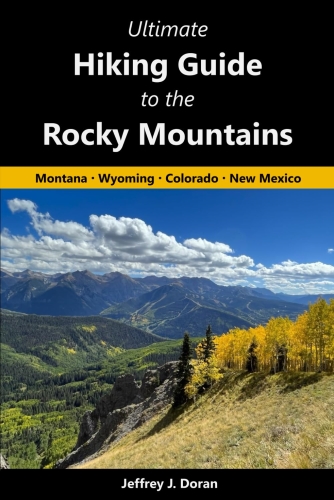
From Montana to New Mexico, the American Rockies stretch for more than a thousand miles. Within this spectacular mountain range are thousands of miles of hiking trails. With such an overwhelming number of options, how will you find and choose the most scenic and rewarding hikes?
Ultimate Hiking Guide to the Rocky Mountains takes all the guesswork out by focusing on some of the most amazing hikes across this range, and provides you with a handpicked list of options that will allow you to make the most of your trips in the Rockies:
[This book is also available in paperback]
**********************************************************************************
Glacier National Park preserves more than a million acres of some of the most spectacular scenery on Earth. With more than 740 miles of trails meandering throughout this vast park, how will you find and choose the most scenic and rewarding hikes?
Exploring Glacier National Park takes all the guesswork out by focusing on the most amazing hikes, and provides you with handpicked recommendations that will allow you to make the most of your trip to Glacier:
**********************************************************************************
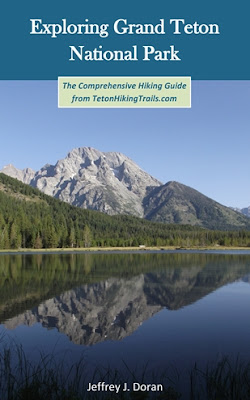
Rising more than 7000 feet above Jackson Hole, the majestic mountains of Grand Teton National Park provide one of the most dramatic landscapes in the world. With more than 240 miles of trails meandering throughout this park, how will you find and choose the most scenic and rewarding hikes?
Exploring Grand Teton National Park takes all the guesswork out by focusing on the most amazing hikes, and provides you with handpicked recommendations that will allow you to make the most of your trip to Grand Teton:
**********************************************************************************
Virtually no one went hiking before the 19th century. What occurred that inspired ordinary people to take a walk in the woods for pleasure?
Ramble On explores the rich history of hiking, and how it evolved into one of the most popular pastimes in the world:
[This book is also available in paperback]
As always, thank you very much!
Wednesday, November 13, 2024
Thursday, November 7, 2024
Rocky Mountain National Park announces 2025 timed entry reservation system
Rocky Mountain National Park (RMNP) will implement its 2025 timed-entry reservation system, beginning May 23, 2025. This reservation system provides day use visitor access in a way that protects resources while creating opportunities for high-quality visitor experiences.
The system, established through the Day Use Visitor Access Plan finalized in May 2024, manages day use visitor access in a way that protects the park's resources, maintains positive visitor experiences, promotes safety, and supports the park’s ability to maintain daily operations. The system will be similar to 2024, with two types of reservations available. One permit will be for the Bear Lake Road Corridor, which includes the entire corridor, as well as access to the rest of the park. This reservation period will be from 5 a.m. to 6 p.m. The second permit will be for the “rest of the park,” excluding the Bear Lake Road corridor. This “rest of park” reservation period will be from 9 a.m. to 2 p.m. Permits issued using the reservation system will allow park visitors to enter the park within two-hour windows of availability, with no set time for departure. The reservation system will apply to all areas of the park. The only cost associated with booking a reservation is a $2 recreation.gov processing fee. The Bear Lake Road Corridor timed entry reservation system will end on Monday, Oct. 20. However, the rest of the park reservation system will end on Tuesday, Oct. 14.
Reservations to enter the park will be available through www.recreation.gov following the below schedule.
* Beginning at 8 a.m. MT on Thursday, May 1. This round of reservations will be available to enter the park from May 24 through June 30.
* The next release will occur on June 1, for the month of July and any remaining days that have not been booked for June.
* July 1, reservations will be available for the month of August and any remaining days that have not been booked for July.
* Aug. 1, reservations will be available for the month of September and any remaining days in August that have not been booked.
* Sept. 1, reservations will be available for October and any remaining days in September that have not been booked.
When planning to visit Rocky Mountain National Park, take time to consider your preparedness, skills, fitness and experience. No matter how you choose to recreate, be prepared to turn back when conditions change or if you are being pushed to your limits. Weather and conditions can change quickly in the Rockies. Before starting any trip, take time to explore the park's website and plan ahead for a safer and more enjoyable visit.
RMNP is one of the most visited national parks. The park experienced a 44 percent increase in visitation from 2012 to 2019. In 2022, the park received 4.3 million visits. Even with a pilot vehicle reservation timed entry system in place, the park received some of the highest visitation in its history. Between 2016 and 2023, the park piloted several day-use visitor management strategies to address crowding, congestion, and impacts on park resources. These pilots demonstrated this strategy is effective at easing congestion impacts and improved the visitor experience in the park. The park also asked the public for their participation in envisioning the future of day use visitor access at RMNP during the summer of 2021 and the winter of 2022-2023.
Saturday, November 2, 2024
Colorado Parks and Wildlife releases its 2024 Future Generations Act Report
Colorado Parks and Wildlife is pleased to share this year’s annual 2024 Future Generations Act Report, which documents CPW's work towards fulfilling the 10 goals outlined in the Future Generations Act legislation. CPW has committed to fulfilling these 10 goals by 2025. Through ongoing and intentional work by CPW to achieve the goals, significant progress has been made towards ensuring that future generations have access to the quality hunting, fishing and outdoor recreational opportunities we enjoy today.
“The
2024 Future Generations Act Report demonstrates our commitment to preserving Colorado’s outdoor heritage while adapting to the needs of a growing and diverse population,” said CPW Director Jeff Davis. “From expanding access to outdoor recreation to enhancing conservation efforts, our work supports sustainable outdoor opportunities for all Coloradans.”
CPW is making progress on all 10 goals outlined in the Future Generations Act. Here are a few examples as they pertain to hikers:
Goal 4: Supporting Access Programs on Public and Private Lands. CPW continues investing in Colorado’s public lands. The Keep Colorado Wild (KCW) Pass, launched in January 2023, has generated approximately $62 million as of June 30, 2024. This $29 annual pass gives all Coloradans easy access to all state parks and the added benefit of investing in our great outdoors and wildlife.
Goal 4: Supporting Access Programs on Public and Private Lands. CPW remains committed to expanding public access to outdoor recreation. In 2024, CPW awarded 24 non-motorized trail grants totaling $2.4 million, five Land and Water Conservation Fund grants totaling $5.5 million, 52 off-highway vehicle (OHV) grants exceeding $6.2 million, and 36 snowmobile grants nearing $1.3 million.
Expanding access through trails:
Since its establishment in 1971, CPW’s Recreational Trails Program has actively encouraged the development of trails through a number of annual grant programs. Local, county, and state governments, federal agencies, special recreation districts, and non-profit organizations with management responsibilities over public lands may apply for and are eligible to receive non-motorized and motorized trail grants. CPW strives to enhance the experience of Colorado trail users by funding trail maintenance, enforcement, planning, and construction grants and increasing the number of hours of maintenance performed by trail crews. The State Trails Program continues to emphasize maintenance projects for both non-motorized and off-highway vehicle (OHV) trail grant projects to address the increased need to repair and improve existing trails and address resource impacts due to increased visitation on public lands. In FY24, they funded almost 150,542 trail crew hours and awarded over $15.4 million in grants.
************************************************************************************
Check out our online trail guides:
- Glacier National Park: HikinginGlacier.com
- Grand Teton National Park: TetonHikingTrails.com
- Rocky Mountain National Park: RockyMountainHikingTrails.com
Wednesday, October 30, 2024
Rocky Mountain National Park Announces Plans for Prescribed Burn this Friday and Saturday If Conditions Allow
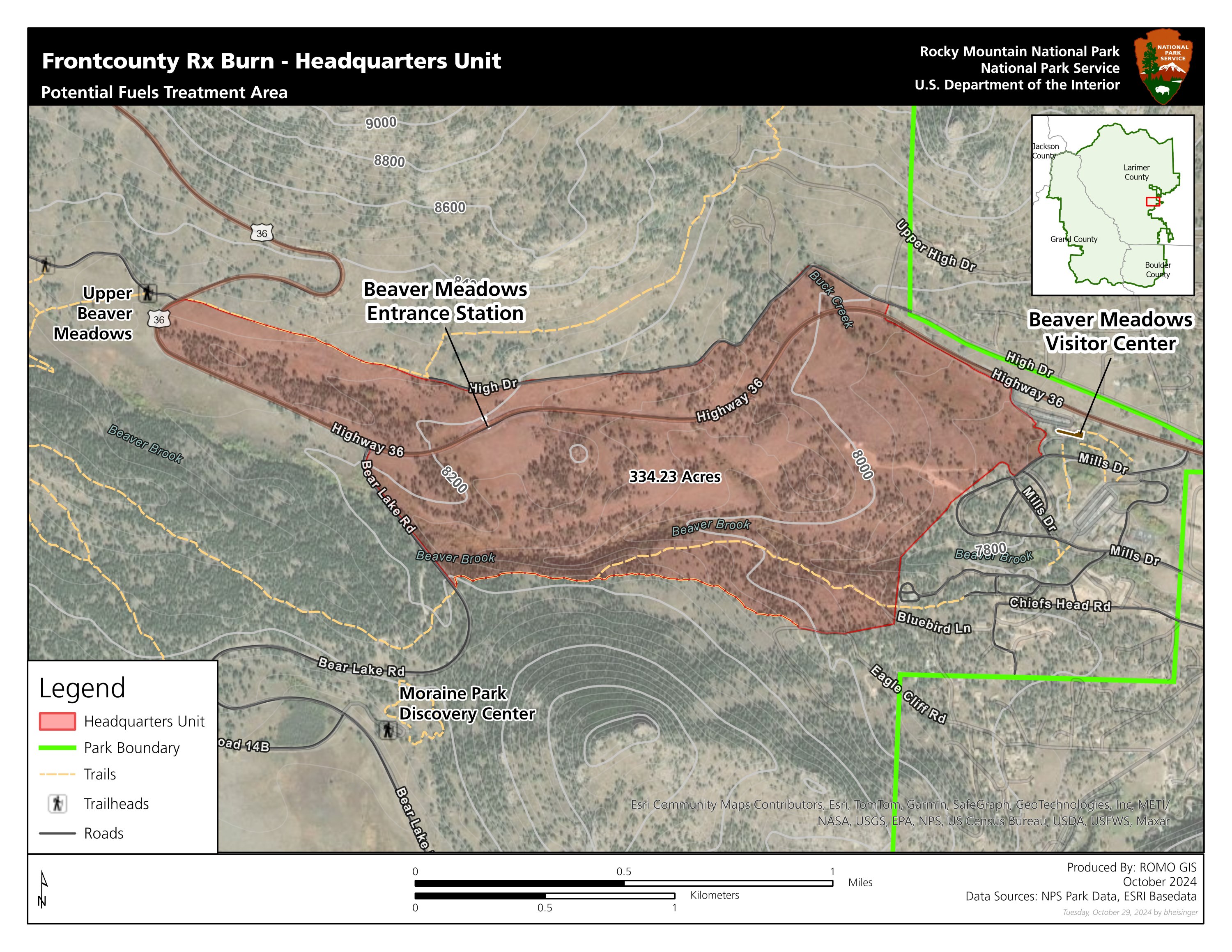
Based upon the potential for favorable weather and fuels conditions, fire managers at Rocky Mountain National Park are planning to conduct a prescribed burn beginning on Friday, November 1, 2024. Firefighters plan to burn approximately 100 acres of the 334-acre Headquarters Unit on Friday, November 1 and Saturday, November 2. This burn unit is located inside Rocky Mountain National Park, west of the Beaver Meadows Visitor Center and south of U.S. Highway 36. Because of the fuel type that will be burned, which include mainly grasses, heavy and prolonged smoke is not expected from this operation.
The primary goal of the project is to reduce the threat of wildland fire to adjacent communities and NPS infrastructure by using prescribed fire to reduce the amount of fuels available in this area. When fighting the East Troublesome Fire in 2020 and the Fern Lake Fire in 2012, firefighters were able to take advantage of previous and existing prescribed fire and hazardous fuels treatment areas that provided a buffer between the fires and the town of Estes Park. Prior hazard fuels projects were instrumental in stopping both fires from crossing Bear Lake and Trail Ridge Roads.
If conditions are favorable, ignitions are planned to occur on Friday, November 1 and Saturday, November 2. Firefighters will be on scene for the duration of the operation and will be patrolling the burned area overnight after operations conclude each day. Smoke from the prescribed burn will be visible throughout the day of the burn, mostly during the warmest part of the day. With cooler temperatures in the evening, smoke may linger and accumulate in low-lying areas.
Fire operations near the Beaver Meadows Entrance to RMNP may cause brief delays or divert outbound traffic through Fall River Entrance. Motorists should watch for fire vehicles on the roads and allow extra time for entering and exiting the park. Traffic control will be in place on U.S. Highway 36 within the burn area. Additional information will be shared on InciWeb at https://inciweb.wildfire.gov/incident-information/cormp-front-country-prescribed-fire and on RMNP’s official social media channels. NPS Fire Information Officers will be available at Beaver Meadows Visitor Center to answer questions.
For the safety of visitors and firefighters, park visitors will not be allowed to stop along U.S. Highway 36 within the burn area. Visitors will also not be able to walk within the burn area.
Smoke may be visible both inside and outside the park. Every effort will be made to minimize smoke impacts on visitors and the adjacent community; however, some smoke is anticipated to disperse east of the park. Smoke may affect your health: For more information see https://www.colorado.gov/pacific/cdphe/wood-smoke-and-health.
Safety factors, weather conditions, air quality, personnel availability and environmental regulations are continually monitored as part of any fire management operation.
************************************************************************************
Check out our online trail guides:
- Glacier National Park: HikinginGlacier.com
- Grand Teton National Park: TetonHikingTrails.com
- Rocky Mountain National Park: RockyMountainHikingTrails.com
Friday, October 25, 2024
Trail Ridge Road is Closed to Through Travel for the 2024 Season
Today, Friday, October 25, Trail Ridge Road (U.S. Highway 34) inside Rocky Mountain National Park (RMNP) officially closed for the season to through travel.
With 11 miles of road located at elevations above 11,500 feet, few guard rails, and no shoulders, Trail Ridge Road is not designed to be an all-season road. Winter conditions of drifting snow, high winds and below-freezing temperatures occur above 10,000 feet. Trail Ridge Road is currently closed at Rainbow Curve on the east side of RMNP and at the Colorado River Trailhead on the west side of the park. Closure points on the road may fluctuate this fall, however the road is closed to through travel for the season.
Interested in taking a scenic drive? There are several popular scenic driving destinations open this time of year, including Bear Lake Road, Endovalley Road, Trail Ridge Road on the west side of RMNP from Grand Lake Entrance to the Colorado River Trailhead and Trail Ridge Road on the east side of RMNP to Rainbow Curve.
Trail Ridge Road normally opens the last week in May, weather permitting. In 2024, Trail Ridge Road opened on Friday, May 31.
Old Fall River Road closed to vehicles for the season on October 8. Trail Ridge Road and Old Fall River Road will remain open to bicycles, hikers, and people walking leashed pets through November 30. Leashed pets and bicycles are only allowed on the roads, not on side trails. On December 1, both roads will transition to "winter trail status." On Sunday, December 1, 2024, bicycles and leashed pets will no longer permitted to travel beyond the closed gates. Pedestrians, snowshoers and skiers will be welcome to recreate during the winter season on both roads.
Subscribe to:
Posts (Atom)