Tuesday, March 31, 2020

My Top 30 Hikes of All-Time

Looking back at my childhood, I would have to say that I was extremely fortunate to have grown up in a semi-rural area. Though it's more than likely you never heard of Mack, Ohio, you're probably well aware of our largest suburb just to our east - Cincinnati. The dead-end street that we lived on backed-up to a fairly large wooded area covering several hundred acres. No doubt this is where my love for the outdoors was ingrained into my soul. My friends and I spent countless hours in those woods; hiking, riding our Huffy bikes on trails created by us and older groups of kids, building tree camps, and camping around an open fire. After we learned how to drive we discovered the Red River Gorge in central Kentucky where we started taking our first real hikes. We later graduated to the Great Smoky Mountains where we had our first real taste of big mountains and expansive wilderness. Then in 1986, while enjoying a couple of beers in the basement of a friend, three of us came up with the wild-eye idea of taking a grand road trip out west. This trip took us to the Badlands and Black Hills of South Dakota, before reaching our ultimate destinations of Yellowstone, Grand Teton and Rocky Mountain National Park. The die was cast at that point, and I was forever hooked on the outdoors.

I was also very fortunate to have found a wife that enjoys hiking as much as I do. Together we have explored dozens of national parks, monuments and forests over the years. As a result of the hundreds, probably thousands of miles of hiking I've done over the years, I wanted to put together a list of what I consider to be my favorite hikes. Though I've attempted to rank them in order of best/most favorite, you may not want to assume that this ranking is absolute. I should admit that there may well be a great deal of recency bias, as I have tendency to think that my latest hike was the greatest. Ultimately, I hope that this list will inspire you, or provide you with some new places to explore in the future. Here are my top 30 hikes:

1) Lake O'Hara (Yoho National Park): Parks Canada limits the number of people that can visit this pristine area. In addition to the epic scenery the area has to offer, Lake O’Hara is also famous for its alpine circuit, a loop hike that traverses precipitous ledges with frightening exposure to steep drop-offs. However, there are many other options that hikers can take to enjoy this truly spectacular landscape.

2) Skyline Loop Trail (Mt. Rainier National Park): "Oh, what a paradise!" was Martha Longmire’s reaction upon seeing the lush meadows and spectacular wildflowers of Mount Rainier’s southern valley for the very first time in 1885. The description would stick, as the most popular area in the park is now known as “Paradise”. Once you set your own eyes upon it you’ll understand why. This hike was so incredibly beautiful that it was the first time that I ever kept my camera in my hand for the entire trip. The amazing scenery just never ended!

3) Grinnell Glacier Overlook (Glacier National Park): This hike travels along the world famous Highline Trail for much of its distance. The incredible views, the wildlife, and the wildflowers, all combine to make this a trek you'll remember the rest of your life. Though hikers will have a couple of options for enjoying the Highline Trail, I highly recommend taking the steep side trail that leads up to the spectacular Grinnell Glacier Overlook atop the Garden Wall.

4) Wenkchemna Pass (Banff National Park): The hike to Wenkchemna Pass begins from Moraine Lake, which sits at the foot of the Valley of the Ten Peaks. Both the lake and the valley were featured on the reverse side of the Canadian twenty dollar bill between 1969 and 1979. At the foot of the lake is a large pile of boulders and rocks, leftovers from the glaciers that retreated thousands of years ago. A climb to the top of the rock pile is a popular destination for photographers. The view there of the lake and the valley is considered to be one of the most photographed scenes in Canada, and is now known as the "Twenty Dollar View".

5) Swiftcurrent Pass (Glacier National Park): Although this is one of the toughest hikes in Glacier, it includes tons of spectacular scenery. You'll pass by three lakes and a waterfall while traveling up the Swiftcurrent Valley. Once above the valley floor the trail offers outstanding birds-eye views of six glacial lakes, as well as Swiftcurrent Glacier. At the pass you'll enjoy stunning views of Heavens Peak and Granite Park.

6) Iceline Trail (Yoho National Park): While ascending the avalanche path hikers will enjoy views of Takakkaw Falls across the valley. Once at the top the trail begins crossing over the broken terrain of ancient glacial moraines. From this point forward you’ll enjoy epic alpine scenery, including outstanding views of Emerald Glacier, several small tarns, as well as the spectacular surrounding mountains within Yoho National Park.

7) Mt. Ida (Rocky Mountain National Park): Hands down this is the best hike in Rocky Mountain National Park. The views from the summit are simply epic. In fact, hikers will enjoy outstanding panoramic views along much of the route. Although the terrain becomes fairly rugged on the final leg to the summit, you'll have very little exposure to steep drop-offs. If this still sounds like this might be a little bit out of your comfort zone, you could simply end your hike atop Peak 12,150, a sub-peak along the ridge approaching the summit.

8) Siyeh Pass Loop (Glacier National Park): This one-way hike offers visitors the chance to take-in some of the best of what Glacier has to offer. Hikers will pass through the incredibly beautiful Preston Park, climb up to one of the highest maintained trails in Glacier, and then back down the Baring Creek Valley where you'll have a relatively close-up view of Sexton Glacier.

9) Static Peak Divide (Grand Teton National Park): Cascade Canyon gets all the accolades whenever outdoor media types discuss hiking in the Grand Tetons. However, in my humble opinion, the pundits simply haven't done their homework. I'll admit this is an extremely tough hike, but the alpine scenery is simply epic, and easily makes this the best hike in Grand Teton National Park.

10) Ice Lakes (San Juan National Forest): Ice Lakes just might have the most intense cobalt blue color I’ve ever seen in nature. Combine this extraordinarily beautiful alpine lake with outstanding mountain scenery and several thousand wildflowers, and you have one of the best hikes found just about anywhere.

11) Dragon's Tail (Glacier National Park)

12) Lake Solitude (Grand Teton National Park)

13) Blue Lakes (Uncompahgre National Forest)

14) Mt. Elbert (San Isabel National Forest)

15) Grinnell Glacier (Glacier National Park)

16) Hallet Peak (Rocky Mountain National Park)

17) Chasm Lake (Rocky Mountain National Park)

18) Mt. Rogers (Grayson Highlands State Park)

19) Lake Josephine Loop (Glacier National Park)

20) Gregory Bald (Great Smoky Mountains National Park)

21) Emerald Lake (Rocky Mountain National Park)

22) Grassy Ridge Bald (Roan Mountain - Cherokee National Forest)

23) Rocky Top (Great Smoky Mountains National Park)

24) Parker Ridge (Banff National Park)

25) Avalanche Peak (Yellowstone National Park)

26) Panorama Trail (Yosemite National Park)

27) Wheeler Peak (Carson National Forest)

28) Horsethief Trail (San Juan National Forest)

29) Gilpin Lake / Gold Creek Loop (Mt. Zirkel Wilderness)

30) Skyline Trail (Cape Breton Highlands, Nova Scotia)


                *******************************************************************************

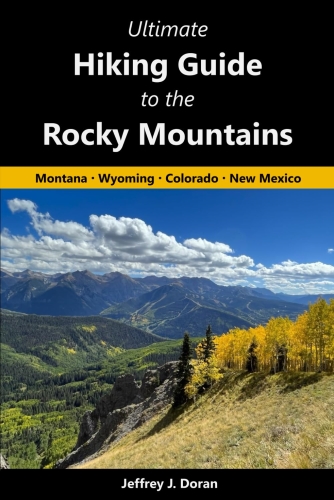
From Montana to New Mexico, the American Rockies stretch for more than a thousand miles. Within this spectacular mountain range are thousands of miles of hiking trails. With such an overwhelming number of options, how will you find and choose the most scenic and rewarding hikes?

Ultimate Hiking Guide to the Rocky Mountains takes all the guesswork out by focusing on some of the most amazing hikes across this range, and provides you with a handpicked list of options that will allow you to make the most of your trips in the Rockies:

Friday, March 27, 2020

Arapaho and Roosevelt National Forests and Pawnee National Grassland to Close Developed Recreation Sites

The Arapaho and Roosevelt National Forests and Pawnee National Grassland (ARP) will begin the orderly closure of certain developed recreation sites and campgrounds as early as March 26, 2020, to protect public health and safety and align with state and local measures already in place to contain the COVID-19 outbreak. Closures will be in place through April 30, 2020, at which point they will be reevaluated.

The ARP takes the safety of our personnel, contractors, volunteers, and visitors seriously. COVID-19 poses unique and unprecedented risks to our workforce, visitors, and the communities we live in and support. Crowded conditions in recent days in parking areas, trailheads, and at popular forest and grassland destinations are undermining the country’s critical efforts to contain the spread.

At this time, all restrooms, including those at trailheads, on the Forests and Grassland will be closed. Picnic areas and day use areas that are typically open this time of year will also be closing. The warming huts at both Berthoud Pass and Brainard Lake are already closed. The East Shore Trailhead is also closing.

Campgrounds currently open, Dowdy Lake and Ansel Watrous Campgrounds, will close and those scheduled to open before April 30 will be delayed in opening. The Squaw Mountain Fire Lookout is also closed. Reservation holders will be notified via email and/or cell phone text message of any changes affecting their reservation and they will receive a full refund.

This is a fluid situation and a full up-to-date list of closed areas is available online at www.fs.usda.gov/recmain/arp/recreation.

The ARP will continue to coordinate its COVID-19 response in alignment with all federal, state and local guidance. Everyone is urged to take the precautions recommended by the Center for Disease Control and Prevention. Their most recent guidelines are available at www.cdc.gov/coronavirus/2019-ncov/about/prevention.html.  Additional information is also available at www.usda.gov/coronavirus.

Given the demonstrated risk of exposure to COVID-19 from large, concentrated gatherings of people, USDA Forest Service Rocky Mountain Region officials are temporarily discouraging continued recreational use on the national forests and grasslands. Safe and responsible use of forests and grasslands will reduce impacts to local communities who may be at risk from COVID-19.

The ARP has moved to virtual services. Please visit us at www.fs.usda.gov/arp and access our forest maps at www.fs.fed.us/ivm. If you need immediate assistance, please call 970-295-6700.


Jeff
RockyMountainHikingTrails.com
HikinginGlacier.com
TetonHikingTrails.com
HikingintheSmokys.com

Ramble On: A History of Hiking
Exploring Glacier National Park
Exploring Grand Teton National Park

All Colorado Parks and Wildlife Campgrounds Closed Until Further Notice

As the State of Colorado continues taking measures to combat the spread of COVID-19, Colorado Parks and Wildlife (CPW) will close all playgrounds, campgrounds, camping and camping facilities (including yurts and cabins) at Colorado’s state parks as well as camping at State Wildlife Areas effective Thursday, March 26 until further notice. This action has been taken based on The Stay-At-Home Order from Colorado Governor Jared Polis and the advice of the Colorado Department of Public Health and Environment (CDPHE) and the Centers for Disease Control and Prevention (CDC).

CPW will notify all campers currently on-site to vacate immediately and staff will be contacting reservation holders and provide the process for either refunds or changes for those affected campers.

As of today, non-campground outdoor areas of parks, including trails, boat ramps, marinas and shorelines remain open. However, CPW managers may close areas that do not allow for social distancing. This could include picnic areas, fishing piers and other more concentrated recreation areas and will be determined by location. CPW encourages people to take local and state stay-at-home orders seriously, and limit travel time wherever possible, even for approved recreation.

Park visitors are reminded to practice social distancing and maintain at least six feet between other visitors. Anyone demonstrating signs of illness, such as coughing, fever or shortness of breath should stay home. Restrooms also remain open, and visitors are advised to take soap for handwashing and alcohol-based hand sanitizers when water is not available.

Most importantly, CPW recommends that everyone follow precautionary guidance issued by the CDC, CDPHE, public local health agencies, and the Colorado Governor’s Office when recreating in the outdoors.

Last week, CPW temporarily suspended classes and large events and has temporarily closed facilities such as visitor centers and area offices.

CPW is monitoring the COVID-19 situation carefully and is committed to following the state’s updated policy on social gatherings to help slow the spread of COVID-19. Visit CPW on the web for the most up-to-date information on how CPW is supporting the state’s COVID-19 efforts, as well as our social media platforms: Facebook, Twitter and Instagram.

When getting outside, Coloradans must practice social distancing to help prevent COVID-19 and limit community spread. Updated information about Colorado Parks and Wildlife’s response to the COVID-19 pandemic is available at cpw.state.co.us.

In addition, all US Forest Service campgrounds, restrooms, trailheads, cabins and fire lookout rentals, picnic sites and trash facilities are closed to the public. Check with your local National Forest, Bureau of Land Management, National Park Service, or US Fish and Wildlife Service office for specific closures and allowed recreation activities.


Jeff
RockyMountainHikingTrails.com
HikinginGlacier.com
TetonHikingTrails.com
HikingintheSmokys.com

Ramble On: A History of Hiking
Exploring Glacier National Park
Exploring Grand Teton National Park

Thursday, March 26, 2020

Are Air Horns Effective as Bear Deterrents?

Almost ten years ago I posted a blog that explored the question as to whether air horns are effective as bear deterrents. My thoughts were that the high-decibel noise coming from an air horn might be more effective than bear spray for three reasons:

1) You don't have to worry about the direction of the wind (or rain)

2) You don't have to wait for the bear to get close enough before sounding the horn

3) Bears have much better hearing than humans, thus the noise would potentially bother them even more than humans

That posting has generated quite a bit of interest over the years - in fact, it's the most popular post on this blog of all time - generating almost 50,000 views. As a result, I decided to revisit the subject to see if there was anything new to report. Specifically, are there any new studies that provide hard evidence as to whether or not air horns actually work?

It seems that the idea of using air horns has actually gained some traction since the last time I visited this topic. However, I still couldn’t find any hard evidence on the effectiveness of them as a deterrent against black bears or grizzly bears.

Here’s what I did find:

In an “Ask A Bear” column (updated in 2017), Backpacker Magazine cited a test conducted on polar bears in the 1970s that found that "ultrasonic frequencies fine-tuned and blasted over large speakers repelled bears roughly 69% of the time from a testing perimeter that contained food. Of the testing pool of 74 bears, 51 were strongly repelled, but eight bears exhibited no response, and 15 polar bears actually chose to investigate the source of the sound." The article concluded that loud noise may act as a deterrent, but it can also act as an attractant. This conclusion is also essentially being communicated on several government websites, as we shall see further below.

The study cited by Backpacker was effectively the only research that I could find that was related to my question, but it really didn’t answer it. One, the test was conducted on polar bears, and two, air horns weren’t used in the test. I should point out that the column also states that bear guru Stephen Herrero believes that an ultrasonic bear repellent is worthy of further study and testing. There is one other study that I found that I should mention here. It was conducted by Gary D. Miller from the Zoology Department at the University of Montana. The study tested several potential bear repellents on 2 male grizzly bears and 2 female polar bears at the Churchill Bear Laboratory in Churchill, Manitoba. The study found that air horns did not repel either of the two bears tested. I have to take this result with a large grain of salt, however, given the extremely small sample size and the fact that the bears tested were not in the wild.

The Get Bear Smart Society, a Canadian organization that works to educate the general public as well as government agencies across North America, believes that air horns can be effective when used in conjunction with human dominance techniques to move a bear off (A guide to non-lethal management techniques). On their website they also state:
Noise deterrents work by making a loud, unpleasant sound that causes the bear to be uneasy and move away. Noise deterrents are advantageous if you are a long distance away from the bear. Furthermore, they cause neither harm nor injury to the bear when correctly used.

In some cases, noise deterrents do not work either because the bear has habituated to human noise or because it has no natural fear of the noise.
I found several governmental websites in the United States and Canada that offered similar advice. For example, the Kenai Fjords National Park website states that “It is a good idea to carry a non-lethal deterrent such as an air horn or pepper spray in case of a surprise encounter…”

As a result of the Marine Mammal Protection Act, the U.S. Fish and Wildlife Service published Deterrence Guidelines in the Federal Register, which states that:
These guidelines…are appropriate for safely and nonlethally deterring polar bears from damaging private and public property and endangering the public. The use of commercially available air horns and other similar devices designed to deter wild animals…may be effective in deterring bears while causing no lasting or permanent harm to individual animals.
The Kluane National Park and Reserve in northwestern Canada recommends bear spray as your best deterrent, but also mentions that "Other tools can help you deter a bear: noisemakers such as air horns" can be used as well.

The Alaska Department of Fish and Game links to information from several websites and brochures. This includes one from the Arctic National Wildlife Refuge which states that you should "Consider the range of actions you could take. Start with the least aggressive options, such as using noise makers, grouping together, yelling or clapping, or deploying air horns". Another links to a brochure from Park Canada that states that air horns may be effective in deterring a polar bear. Interestingly, the Fish and Game website also mentions using air horns as a defense against an aggressive wolf.

A brochure published by the British Columbia Forest Safety Council states that "Noises that cannot be reproduced in the wild, (e.g. a metallic noise), will let a bear know that you are approaching and give them advanced notice to move out of the area. However, noisemakers that startle a bear, such as an air horn, can provoke an attack. If you release an air horn too close to a bear hiding in the bush and it startles them, they may charge."

The Manitoba Wildlife and Fisheries Branch asserts that "When hiking, carry bear deterrent spray and also consider taking a walking stick and an air horn as further deterrents."

The Government of Alberta's website provides this guidance:
The two most effective bear deterrents are bear spray and noisemakers. Carry both when in bear country.

The most effective noisemaker in bear country is you. Talking or singing loudly can help prevent surprise encounters with wildlife. With enough warning of your approach, wildlife typically remove themselves and their young from the area.

When I see a bear, should I use a noisemaker or bear spray?

* Noisemakers are best used to deter a bear that is at a distance – one that sees you and continues to approach or one that's heading to your camp or settlement.

* Before using noisemakers, be sure to assess the situation. Make sure the surroundings are clear of people and the bear has an obvious way out. A bear that's been startled by a noisemaker may not be able to avoid groups of people as it flees the area.

* Remember, the noisemaker may not immediately deter the bear, especially if the bear has had previously experience with noise deterrents. Also, noisemakers may not prevent the bear from returning to the area.

* Bear spray is best used when you need to deter a bear at close range.
Finally, a brochure from the Nunavut Department of Environment states that "Noisemakers are a simple, first level deterrent. However, bears quickly become accustomed to sounds when no other negative effect is present. Have other deterrents or a lethal firearm present and ready in case the noisemakers are ineffective."

I think the bottom line is that there’s no 100% safe and reliable way to deter a bear. Each bear has a different personality, and each encounter is essentially a unique situation. Your best bet is to make sure that you make a lot noise while hiking in bear country, and to practice bear awareness and avoidance techniques. If you do encounter an aggressive bear, and wish to use an air horn, my advice would be to have bear spray as a back-up in case the air horn doesn't work as intended. You can certainly make the argument that its probably best to have both in case one of the products fail for one reason or another.


Jeff
RockyMountainHikingTrails.com
HikinginGlacier.com
TetonHikingTrails.com
HikingintheSmokys.com

Ramble On: A History of Hiking
Exploring Glacier National Park
Exploring Grand Teton National Park

Tuesday, March 24, 2020

A Day Hike up to Hallett Peak

Back in 2014 David Socky and friends took a hike up to 12,713-foot Hallett Peak in Rocky Mountain National Park. The video below shows some of the highlights from that trip - which happens to be one of my favorite hikes in the park. Round trip, the hike travels 10.3 miles, and climbs roughly 3240 feet. But as you can see from this film the spectacular views make it all worthwhile. You can find additional information on this hike from our website by clicking here.


In addition to Hallet Peak, Rocky Mountain National Park has many other outstanding hikes that take-in the best scenery the park has to offer. If you do plan to visit Rocky Mountain this year, please note that our hiking website also offers a wide variety of accommodation listings and other things to do to help with all your vacation planning.


Jeff
RockyMountainHikingTrails.com
HikinginGlacier.com
TetonHikingTrails.com
HikingintheSmokys.com

Ramble On: A History of Hiking
Exploring Glacier National Park
Exploring Grand Teton National Park